How We Built Threadbare in 8 Weeks (With a Team That Had Never Made a Game)
Eight weeks. No game developers. One year later, more than 26,000 learners have stepped into the world we built.
That’s the short version of Threadbare’s origin story. And honestly, it still surprises us when we say it out loud.
In Episode 2 of Loom Lounge, the team rewound to the beginning: how a small group of educators, a product designer, and engineers who had never shipped a game decided to build one anyway, and what they discovered along the way.
What started as an experiment quickly became something bigger — a collaborative game where players don’t just explore a world. They help build it.
The constraint that shaped everything
Most game projects start with a game developer. Ours didn’t.
The team was made up of educators, a product designer, and engineers who were learning game development while building the game itself. What initially looked like a limitation turned out to be the defining feature of the project.
As Heather, Director of Learning Programs, explained:
“Our team was made of educators and a product designer… we really had to learn a lot while we built.”
Because no one on the team could rely on assumptions about how games are normally made, we had to start with more fundamental questions. Instead of jumping straight into mechanics or technology, we asked what kind of experience we wanted learners to have and what would make a game world worth returning to.
Those questions shaped every decision that followed.
The questions that led to a breakthrough
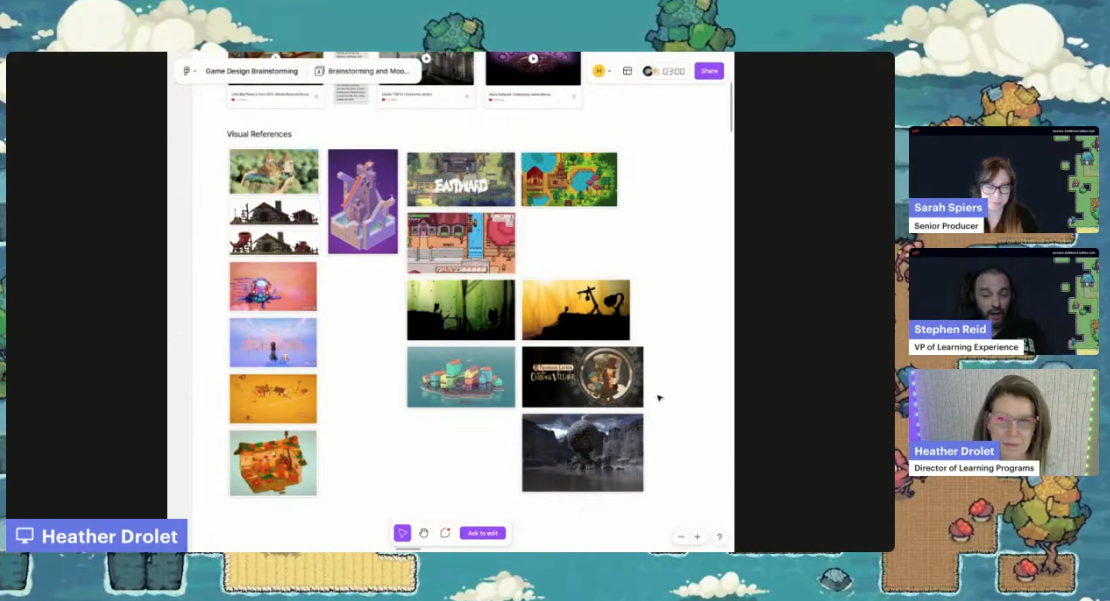
Before writing a single line of code, the team cleared their schedules for weeks of ideation. Digital boards quickly filled with references from games, films, books, and personal memories.
Stephen kept returning to a moment from Tomb Raider: the first encounter with the T-Rex, where sound, tension, and surprise combine into something unforgettable. Decades later, he still remembered exactly how it felt.
The team kept circling three questions:
- What makes games memorable?
- What emotions do great games create?
- What kinds of worlds invite exploration rather than simply guiding players through tasks?
At first, the ideas on the board looked unrelated: cozy exploration, puzzle mechanics, creative tools, cultural themes, collaborative play. But underneath them all was something consistent.
Stories.
Every idea the team loved was ultimately about a story someone wanted to tell.
Heather described the moment the team realized it:
“All of these ideas had one thing in common… the ability to get to that vibe through a story.”
That was the breakthrough. Not a mechanic. Not an art style. The realization that stories were the thread that could hold everything together — and that if stories were central, players shouldn’t just consume them.
They should bring their own.
A world literally held together by stories
Once that insight clicked, the world of Threadbare began to take shape.
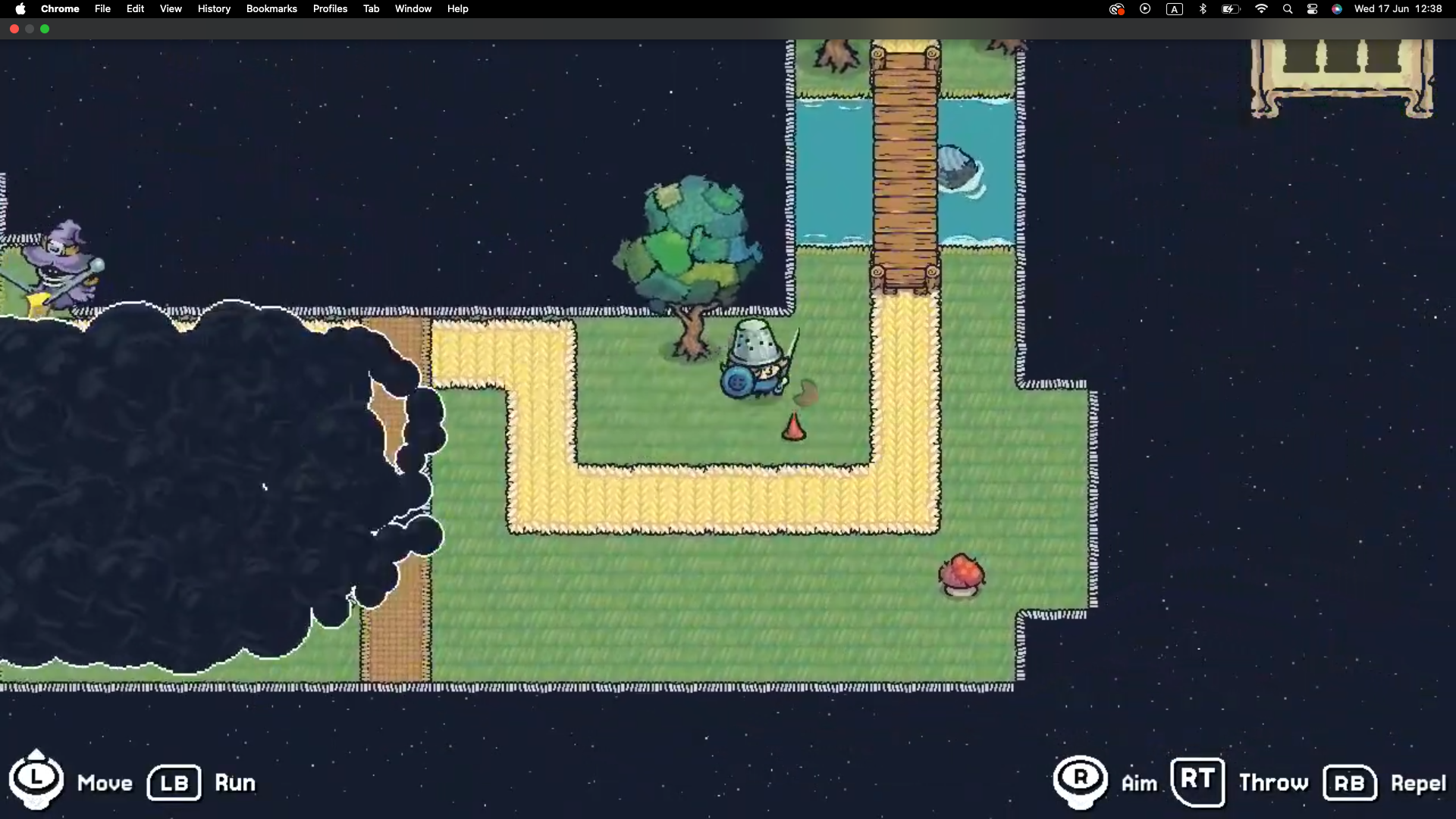
In the game, landscapes appear as stitched fabric, animals resemble patchwork creations, and the environment reflects the idea that stories literally hold the world together. But something has gone wrong. As stories, memories, and traditions fade, the world begins to unravel.
Players enter the game as a Storyweaver, tasked with restoring the world by rediscovering and sharing stories.
Every story in Threadbare is built from three elements the team defined together:
- Memory — stories rooted in real experiences and history
- Imagination — creative storytelling and new possibilities
- Spirit — resilience, emotion, and meaning
As Heather explained:
“Every story you’ve ever heard has elements of memory, imagination, and spirit.”
That framework gave the team a shared language for building the world, and it gave players a way to contribute their own ideas, cultures, and experiences.
From idea to playable game in eight weeks
Here’s the part that still feels a little unreal.
The team began brainstorming in February. By mid-April, learners were already playing a working prototype.
Eight weeks.
The secret wasn’t speed. It was focus. The team intentionally built a Minimum Viable Product (MVP) — the smallest version of the idea that real learners could explore and contribute to.
That meant accepting rough edges. The goal wasn’t to release a polished commercial game. The goal was to put something in front of learners quickly and learn from their participation.
Sarah, the project’s senior producer, captured the philosophy clearly:
“This is a community-built game. People come in with different backgrounds and skill levels… and we help them grow those skills.”
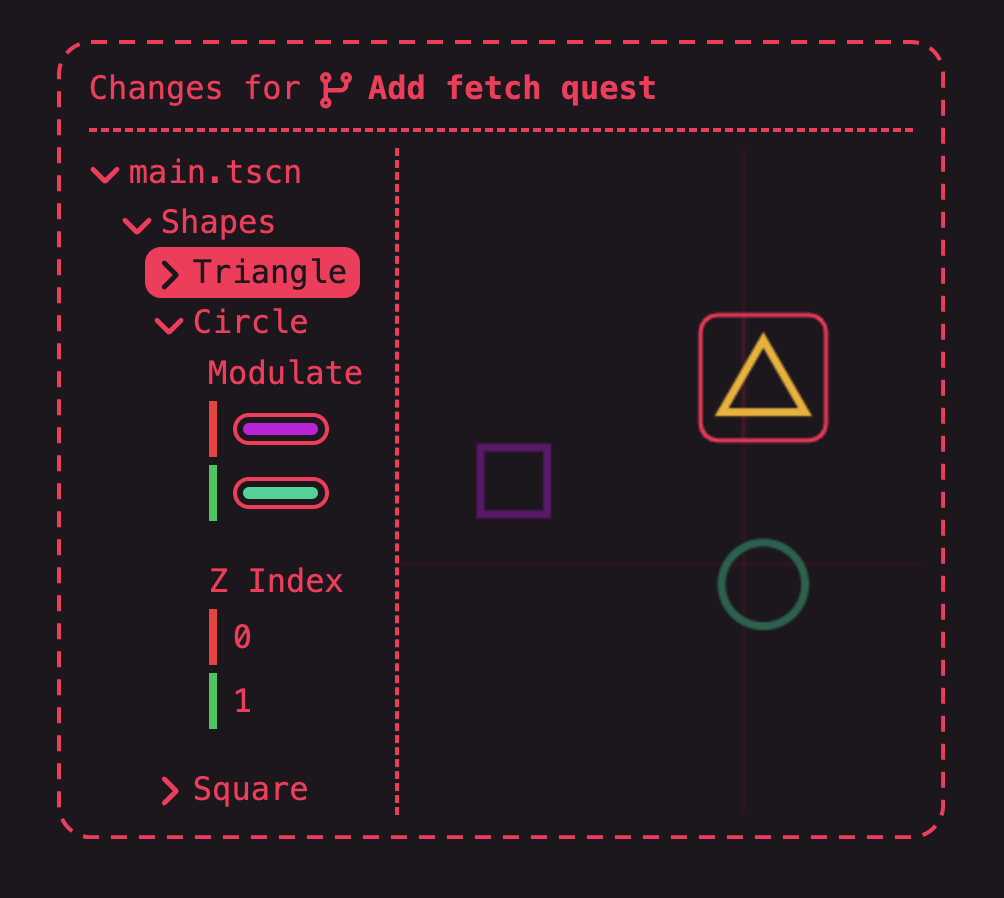
Players contribute pixel art, story quests, puzzles, and even programming improvements. Those contributions become part of the evolving game world.
One year later, more than 26,000 learners have participated.
The idea we keep coming back to
Threadbare was never meant to be a finished product. It was meant to be an invitation.
As Stephen said during the episode:
“We can’t do this without contributors. If people don’t come and play with us, we can’t build the world together.”
What we learned by building a game without knowing how to build a game is simple: when learners become creators, the experience changes. They don’t just engage more deeply. They build things no single team could have imagined on its own.
Threadbare continues to grow because people keep contributing stories, ideas, and creativity to the world
Join the Threadbare community
If the story behind Threadbare resonates with you, there are several ways to stay connected and get involved:
- Join our educator community to explore how game creation can support learning
- Watch the next episode of Loom Lounge for more behind-the-scenes conversations about building Threadbare
- Subscribe to our newsletter to stay updated on new contributions, programs, and learning experiences
Threadbare is still unfolding, and the next chapter will be written by the people who choose to build it.