The Void Pack Is Live. Here's What That Means for Game-Based Learning.
The villain in most games wants something. Power, revenge, territory. You know what it is and you fight it.
The villain in Threadbare's new Void Pack doesn't want anything. It's just what's left when communities stop telling stories. When people forget their neighbor's name. When a festival quietly stops happening one year and no one bothers to restart it. The Void isn't evil. It's neglect made visible.
That's a deliberate design choice, and it matters for how we think about game-based learning here at Endless Access.
What's in the Void Pack
The Void Pack is the first major content release for Threadbare, our open-source 2D narrative adventure game (We are SO excited about it!). The new quest takes about 15 minutes to complete and introduces two new mechanics, plus a world that visibly falls apart around you if you don't move fast enough.
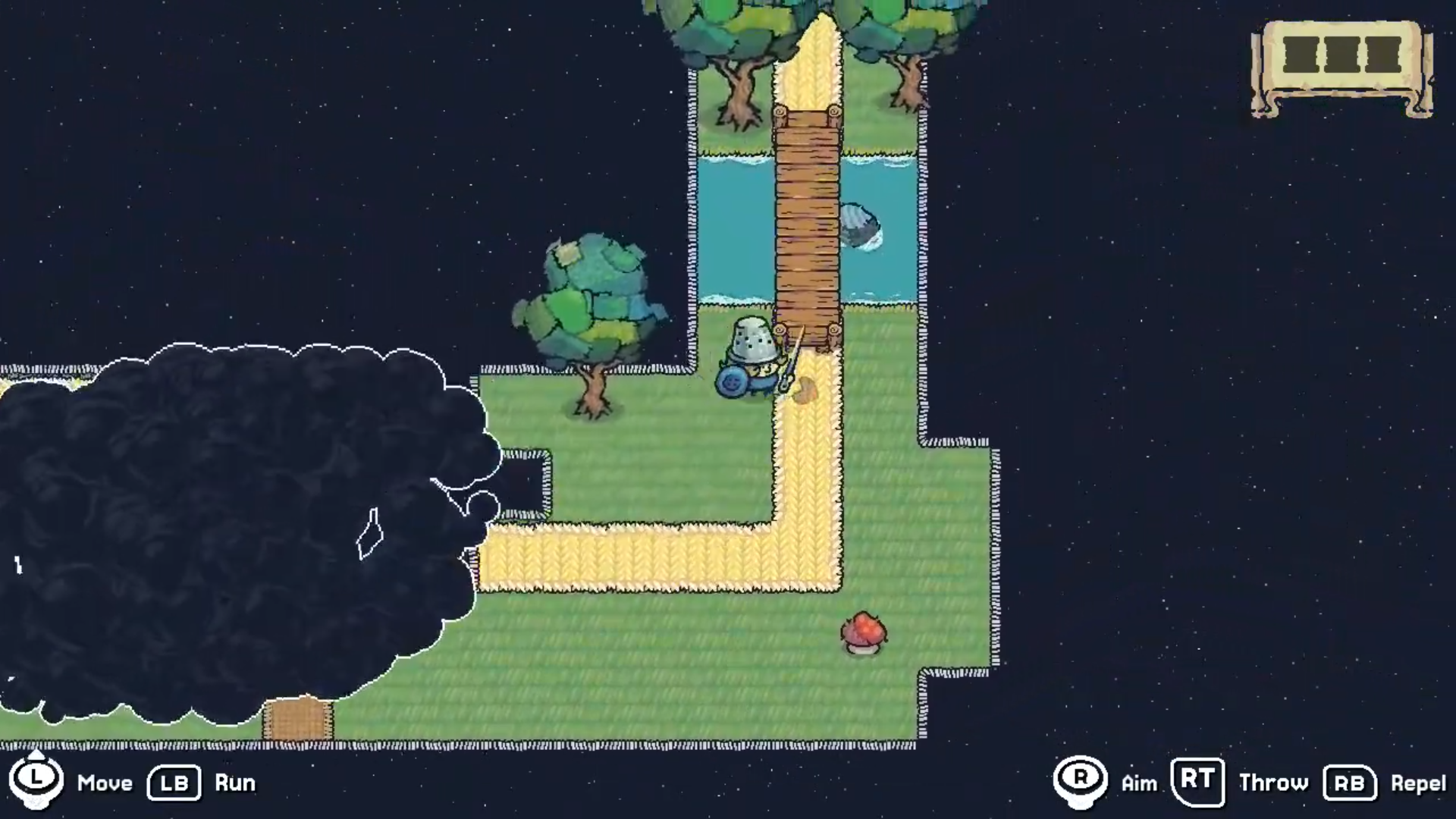
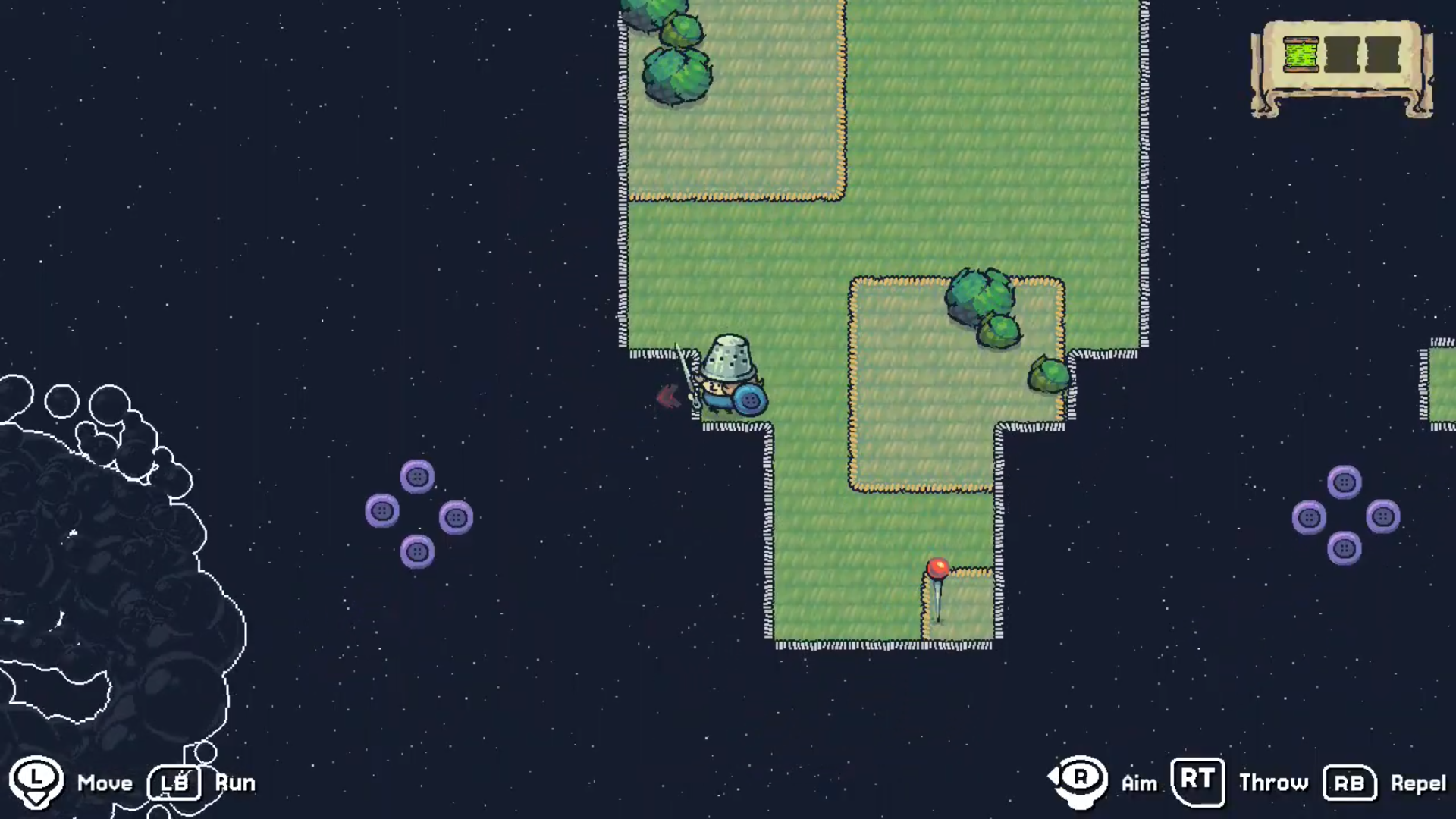
The first mechanic is Void Runner. Players must navigate a winding path to reach a goal before an expanding cloud of void catches up to them. No combat. Just movement, decision-making, and the growing awareness that something is closing in behind you. The landscape disappears as the void bloom passes over it. Trees, bridges, ground: gone. If it catches you, you fall into the abyss and start over.
The second mechanic is the Grappling Hook. Players can throw a line of thread to pull objects toward them or drag themselves across gaps, rivers, and void-covered terrain. It's a traversal tool that opens up new ways to think about level design, puzzle-building, and problem-solving in game making.
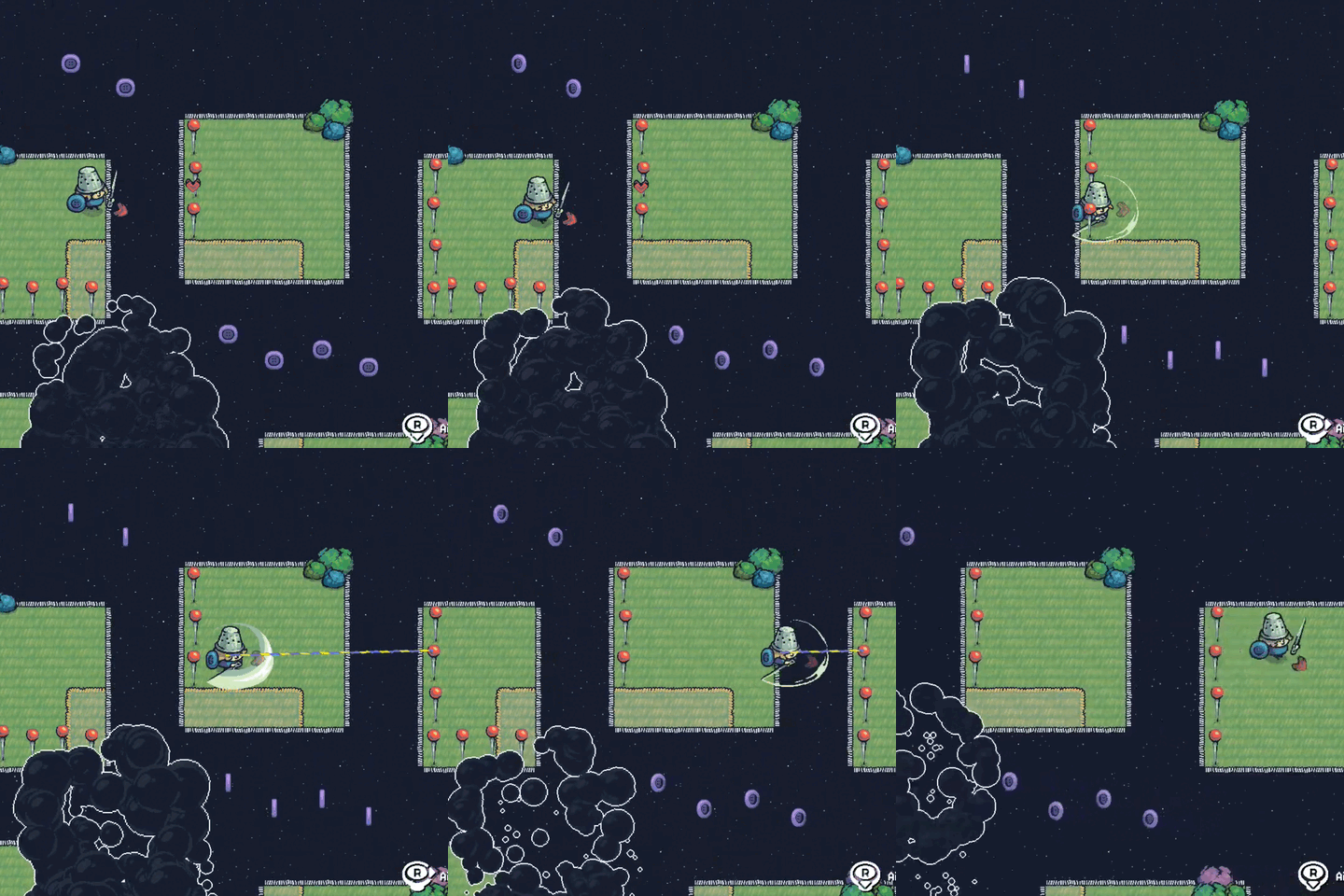
The final challenge in the quest combines both. You're grappling across the void while the bloom is coming for you at the same time. It's the kind of sequence that makes you want to try it again immediately after you fail.
And scattered throughout the quest are buttons, small collectibles that hint at where you should go next. They're a navigation nudge, nothing more for now. What do they mean in the larger lore of the world? That's still being written. Literally.
The Story Behind It
In Threadbare's world, the Void began with one lazy decision. A character named Bobin Blanch was given responsibility for the Loomlight Festival, a huge annual gathering where the people and wisps of the world came together to share stories, songs, and parables. He went fishing instead. (We're not making this up.)
That year, the festival barely happened. The year after, fewer people showed up. A few years later, it stopped happening at all. And as the stories stopped, the world started to come apart. Entire regions were swallowed. Communities forgot each other existed.
The Void didn't do this on purpose. It never does.
That's what makes it an interesting antagonist for a game-based learning environment. It's not a monster to defeat. It's a consequence to understand. When learners complete a quest in Threadbare, they retell that story to the townspeople, inspiring them to repair the world. The act of making and sharing a story is literally what pushes the Void back.
What the Loom Lounge Episode Covers
We dedicated a part of the episode of the Loom Lounge, our live game development series, to the Void Pack launch. The team walks through the lore behind the Void, the three stages of its progression (void creep, void blisters, void bloom), and how the mechanics were built and iterated over time. You can also watch early prototypes, including a version where the Void just slowly ate the world in a straight line and a chase sequence that Will admitted was probably too hard.
And if you want to see the formal launch in person: we're heading to Serious Play 2026 in Germany this week, where we'll be presenting, sponsoring, and running Threadbare in an actual arcade cabinet. That last part still feels a little surreal to us. We'll also be streaming live from the event, so stay tuned.
What This Opens Up for Educators and Partners
Both mechanics are now available as modular, reusable components in Threadbare's open codebase. That's not incidental. It's the point.
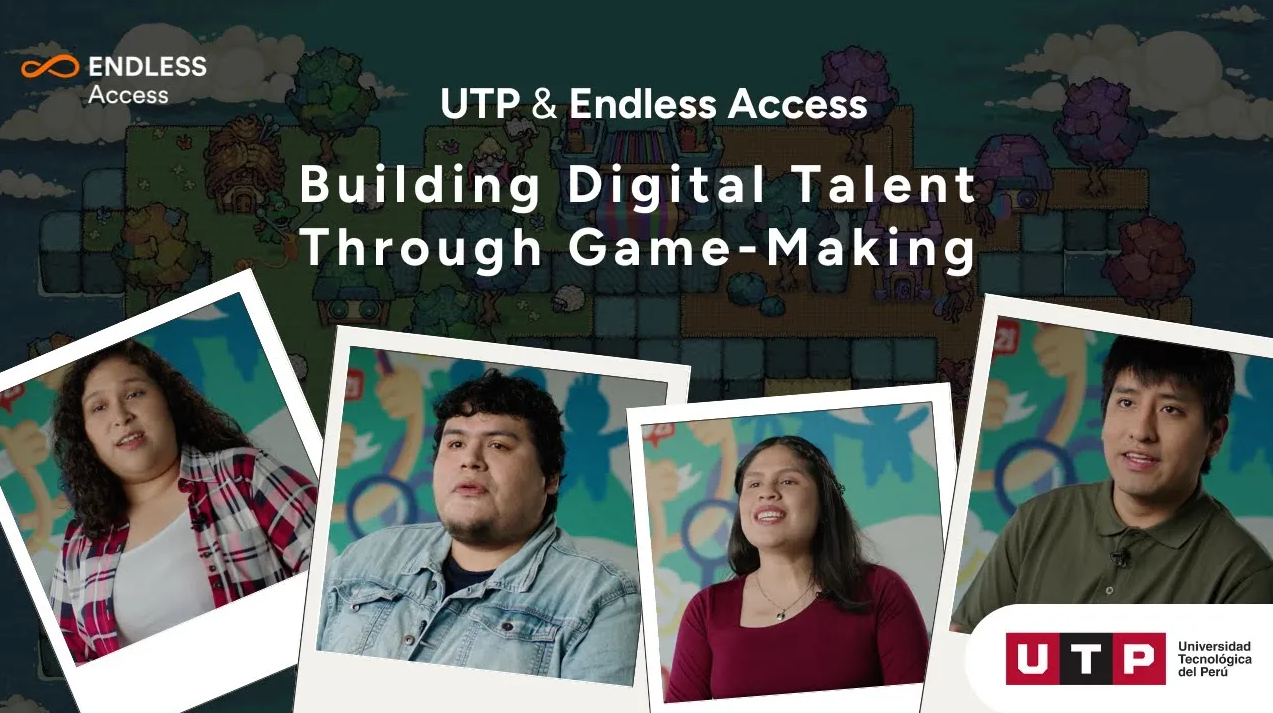
Educators running game-making programs through Core and More can hand these components directly to learners and say: take this, make it yours. The grappling hook doesn't have to be about thread. It doesn't have to be about the Void at all. One cohort has already repurposed it as a "repair broken electrical cables" puzzle. We've spotted it in our most recent LoreJam with students from UTP and their submissions.
This is the through-line in everything we build: learners aren't just playing a game, they're contributing to one. That distinction matters a lot when you're thinking about what game-based learning actually produces. As we've written before, game development brings together coding, storytelling, art, and collaboration in a single project, and the Void Pack gives learners a new set of tools to work with inside that project.
The Void's visual assets (the bloom, the blistered trees, the frayed stitched edges) are also available as building blocks for anyone building content with higher stakes or more complex themes. And the narrative framework itself, a world that unravels when people stop caring for it and gets repaired when they do, is rich territory for learners working on story quests tied to their own cultural contexts.
For partners thinking about what game-making produces beyond the screen, this is also worth noting: the StoryQuests learners build while working with mechanics like these are the artifacts behind the ASU-backed microcredentials we offer through our programs.
Open Source Means Open to You
Threadbare is built in the open, which means the Void Pack has technically existed in the codebase for a while. What we're doing now is drawing a line and saying: this is done. It's playable, it's coherent, and it's ready. We're SO proud of it. Can you see our excitement? :)
Play it, share it with your learners, and tell us what they do with it. If you find something broken, hit the report button in the pause menu and it goes straight to our GitHub. If you have ideas about where the mechanics could go next, drop them in Discord. And if you want to know more about how the Void Pack fits into our learning programs, we'd love to hear from you.