Un videojuego de código abierto ganó lo mejor de GDC. Esto es lo que pasó en el stand de Threadbare.
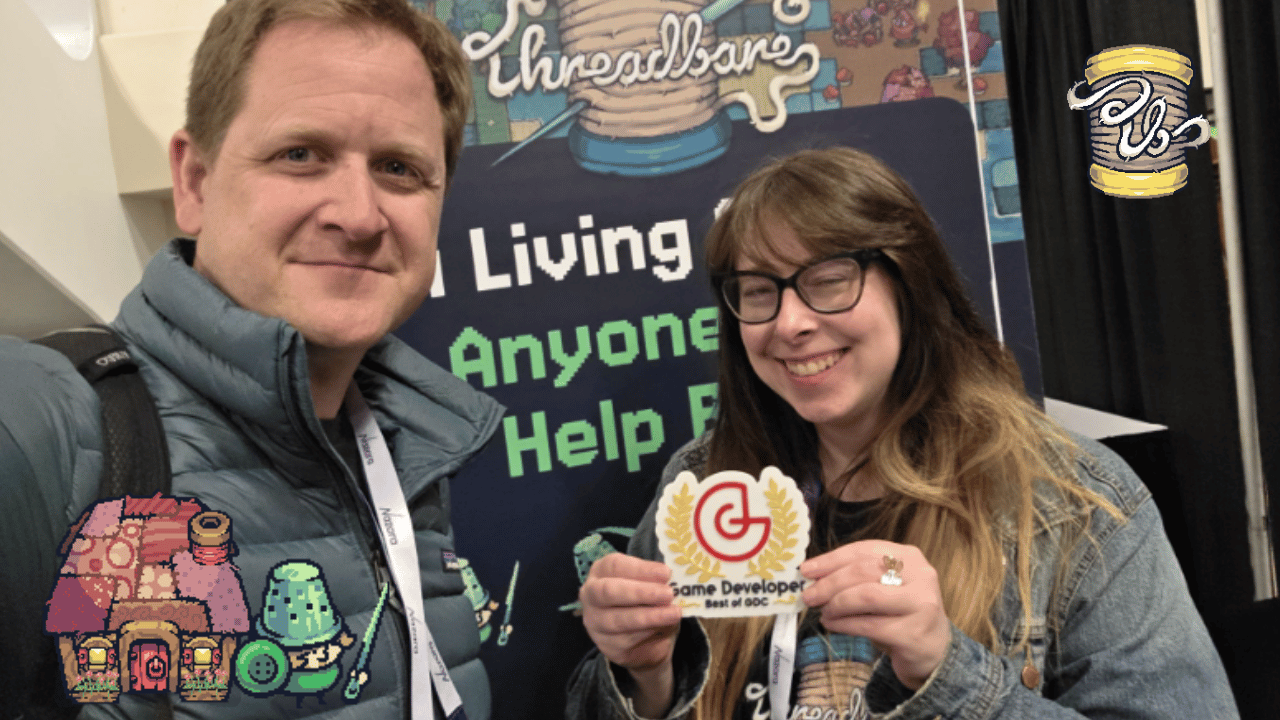
En la Conferencia de Desarrolladores de Juegos de este año en San Francisco, algo inesperado sucedió en nuestro stand.
El equipo de Game Developer se detuvo para probar Threadbare y aprender sobre el concepto. Pasaron tiempo jugando el juego, haciendo preguntas sobre cómo funciona el proyecto y viendo lo que se desarrollaba alrededor de la mesa. Lo que comenzó como una visita rápida se convirtió lentamente en una conversación más larga sobre juegos de código abierto, colaboración comunitaria y cómo los alumnos contribuyen al proyecto.
Más tarde ese día regresaron con noticias que no esperábamos.
¡Threadbare había sido galardonado con el premio Best of GDC por Game Developer! ¡Esto es enorme!
Para un proyecto construido como videojuego de código abierto, y para un equipo centrado en el aprendizaje y el desarrollo impulsado por la comunidad, ese reconocimiento significó mucho. Pero lo que hizo que el momento fuera significativo no fue solo el premio. Era todo lo que había estado sucediendo alrededor de la caseta durante toda la semana.
Porque sin planificarlo, nuestro espacio había empezado a convertirse en algo completamente diferente.
Construyendo algo diferente en GDC
Hace tres semanas viajamos al Conferencia de Desarrolladores de Juegos (GDC), una de las mayores reuniones de desarrolladores de juegos en el mundo. Alrededor de 20,000 personas se reúnen cada año provenientes de estudios, equipos independientes, programas educativos y comunidades creativas.
La gente asiste a GDC por muchas razones diferentes. Algunos buscan financiamiento u oportunidades de carrera. Otros vienen a compartir su trabajo, aprender nuevas técnicas o conectarse con personas que se preocupan profundamente por los juegos.
Vinimos con una intención clara. Queríamos mostrar lo que estamos construyendo y conocer a la gente que tal vez quiera construirlo con nosotros.
En el centro de eso estaba Enhebrable, nuestro videojuego de código abierto creado por la comunidad, y las experiencias de aprendizaje conectadas a ella a través de nuestros programas. Juntos representan una forma diferente de pensar sobre el desarrollo de juegos. En lugar de un pequeño equipo que crea un producto terminado a puerta cerrada, Threadbare está diseñado como un proyecto que crece a través de la colaboración.
Los estudiantes, desarrolladores, artistas y narradores de historias pueden contribuir y ver que su trabajo se convierte en parte de un juego real.
Como dijo Sarah durante la conferencia:
¨Queríamos conocer a otros desarrolladores de juegos que compartan nuestra pasión por el código abierto y los juegos creados por la comunidad, y llevarlos a lo que estamos creando”.
El stand se convirtió en algo que no planeamos
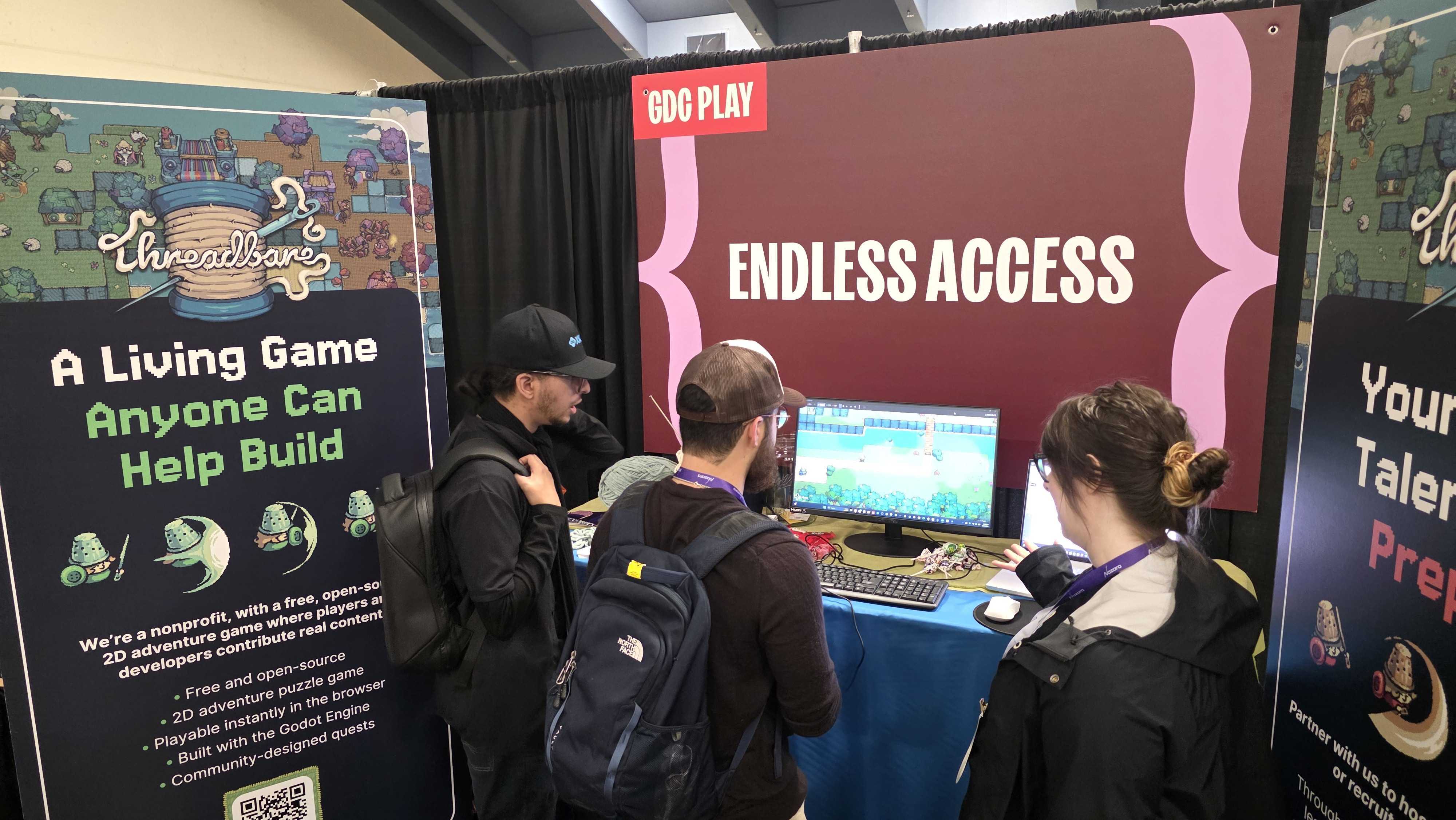
Cuando llegamos por primera vez a nuestro stand, la configuración era sencilla. Una mesa, una computadora que ejecuta el juego, y un par de carteles explicando el proyecto. Funcionó, pero aún no capturaba el espíritu de lo que es Threadbare.
Entonces empezamos a dar forma al espacio a medida que se desarrollaba la semana.
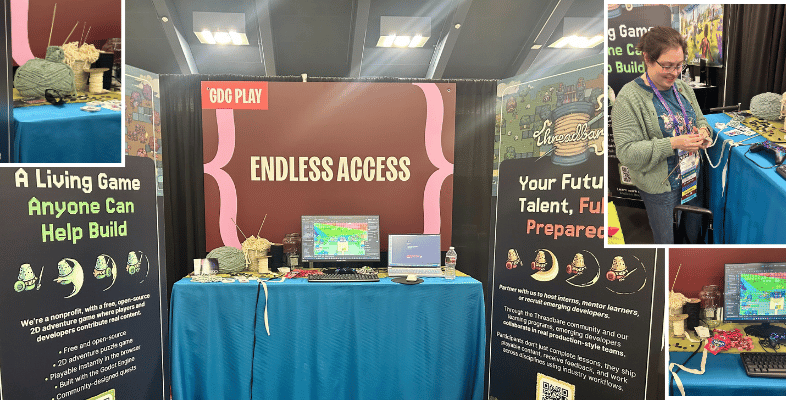
Sarah se acercó a lugares locales en San Francisco y compartió lo que estábamos tratando de hacer. Una tienda de telas nos ayudó a encontrar materiales. Una organización sin fines de lucro que apoya a los educadores abrió el acceso a suministros creativos. Poco a poco, el stand empezó a evolucionar.
Lo que surgió fue algo interactivo e inesperado.
La gente no se limitaba a pasar a probar el juego. Ellos se quedaron. Algunos se unieron a las conversaciones sobre el desarrollo de juegos de código abierto. Otros tenían curiosidad sobre cómo los alumnos podían contribuir a un proyecto real. En un momento dado alguien cogió hilo y comenzó a tejer, y en poco tiempo una bufanda comenzó a tomar forma ya que diferentes visitantes agregaron algunas puntadas antes de pasarla.
“Terminó convirtiéndose en una mesa construida por la comunidad.”, dijo Sarah. ”La gente simplemente se presentaba, comenzaba a tejer, se iba, y alguien más continuaría.”
Sin planificarlo de esa manera, la cabina se convirtió en un reflejo de lo videojuegos de código abierto son sobre. Pequeñas contribuciones de muchas personas construyendo lentamente algo más grande juntos.
Conversaciones que fueron más profundas que la demo
GDC está lleno de increíbles stands y presentaciones. Muchos espacios están diseñados para demostraciones rápidas donde las personas prueban algo durante unos minutos antes de pasar a la siguiente experiencia.
Nuestro stand creó un tipo diferente de interacción.
La gente se quedó más tiempo de lo que esperábamos. Hacían preguntas más profundas y querían entender no solo el juego en sí sino la idea detrás de él.
Justin lo notó al principio de la conferencia.
”La gente colgaría en nuestro stand el tiempo suficiente como para sentir el deseo de recoger algo y empezar a tejer. Eso solo sucede si la conversación es diferente.”
A lo largo de la semana hablamos con desarrolladores, educadores, estudiantes y organizaciones de todo el ecosistema. Algunos estaban explorando el desarrollo de juegos de código abierto por primera vez. Otros ya formaban parte de comunidades abiertas y estaban emocionados de ver un juego diseñado en torno a ese modelo.
Para muchos educadores, la conexión se hizo evidente cuando vieron cómo Threadbare se conecta directamente con nuestros programas de aprendizaje.
Aprendizaje a través de la contribución
Threadbare está estrechamente relacionado con nuestros programas de aprendizaje.
Cada programa ofrece un nivel diferente de compromiso con la creación de juegos, pero en todos ellos los alumnos están contribuyendo de alguna manera. Algunos comparten ideas, arte o conceptos narrativos. Otros construyen elementos jugables, experimentan con mecánicas o contribuyen directamente al repositorio del juego.
Explore introduce a los alumnos a la creación de juegos a través de puntos de entrada accesibles. Core desarrolla habilidades de desarrollo colaborativo e incluye desafíos como StoryQuests, donde los alumnos dan forma a las ideas narrativas y de juego. More amplía el camino hacia contribuciones más profundas al proyecto Threadbare en vivo a través de flujos de trabajo de código abierto.
El tipo de contribución cambia en cada nivel, pero el principio sigue siendo el mismo. Los alumnos no solo consumen contenido. Están agregando algo propio.
Otros miembros de la comunidad pueden ver esas contribuciones, construirlas y, a veces, incluso integrarlas en el juego en evolución en sí.
Esto es lo que hace desarrollo de juegos de código abierto un entorno de aprendizaje tan poderoso. Permite a las personas participar en un ecosistema creativo real mientras desarrolla habilidades en diseño, programación, narración de historias y colaboración.
Escuchar tanto como compartir
Fuera del stand, Sarah y Justin pasaron tiempo en mesas redondas, talleres y discusiones de grupos más pequeños a lo largo de la conferencia.
Esos espacios ofrecían un tipo diferente de aprendizaje. Menos sobre la presentación y más sobre el intercambio de ideas con personas que trabajan en desafíos similares.
”En GDC realmente hay algo en todo,” Sarah reflexionó. “Desde cómo operan los estudios hasta cómo se diseñan los juegos. Pero las mesas redondas destacaron porque tenías que estar ahí. Esas conversaciones no ocurren en ningún otro lugar.”
Justin pasó gran parte de su tiempo conectándose con educadores explorando el desarrollo de juegos como una herramienta de aprendizaje. ”No todos están tan conectados en este espacio”, dijo. “Estar en esas habitaciones permitió conocer gente que busca exactamente este tipo de trabajo, pero aún no sabía que existimos..”
Esas conversaciones nos ayudaron a comprender mejor dónde encaja Threadbare dentro de un movimiento más amplio en torno a la colaboración abierta y el aprendizaje a través de la práctica creativa.
Los momentos que se quedaron con nosotros
Lo que hizo que la semana fuera significativa no fue la escala de la conferencia ni el número de personas que conocimos. Fueron los momentos en los que algo clicó. Un estudiante que se da cuenta de que podría ser parte de la construcción de un juego. Un educador que reconoce cómo el desarrollo colaborativo de juegos podría funcionar en su salón de clases. Un desarrollador viendo cómo los modelos abiertos podrían ampliar la forma en que se crean los juegos.
”Estas no fueron interacciones rápidas”, reflexionó Justin. ”La gente entró ya curiosa, y luego se quedó para entender realmente lo que estamos construyendo.”
Es posible que esos momentos no siempre se muestren en las métricas, pero son los que hacen avanzar las cosas.
Recibiendo el Lo mejor del reconocimiento GDC de Game Developer fue un momento increíble para el equipo.
Pero el premio también representa algo más grande. Refleja un creciente interés en videojuegos de código abierto y modelos de desarrollo impulsados por la comunidad que invitan a más personas al proceso creativo.
Threadbare todavía está evolucionando, y todavía estamos al principio de este viaje. Pero la experiencia en GDC reforzó algo que creemos profundamente. Los juegos pueden ser más que productos terminados. Pueden ser espacios donde las personas aprenden, contribuyen y se conectan mientras construyen algo juntos.
Y cuando esos espacios están conectados a vías de aprendizaje significativas, se convierten en algo aún más grande. Se convierten en una forma de entrar.
¡Únete a nosotros!
Suscríbete a nuestro newsletter
Únete a nuestra comunidad de educadores en Discord
¿Quieres jugar el juego? Ve aquí
Con especial agradecimiento a:
- Sarah Spiers, nuestro increíble Productor Senior de Juegos
- Justin Bourque, nuestro increíble líder de programas de aprendizaje

.jpeg)
.png)
.png)
.png)