Why Play Matters: The Three Ingredients Behind Threadbare's Game-Based Learning
Stephen Reid, grew up playing in an abandoned quarry on the edge of his hometown. He scaled its cliffs, waded into its freezing winter floods, and explored the old tunnels carved out for aggregate. In his head, he was surviving the apocalypse. In reality, he was a five-minute walk from home.
However, Heather Drolet's playgrounds looked a little different. She drew whole landscapes on poster paper across her hallway floor and drove Matchbox cars through them. Hers were worlds of imagination, built from books, crafts, and whatever materials were lying around.
Two very different childhoods with one shared truth: play is where our stories come from, and that exact idea sits at the heart of Threadbare.
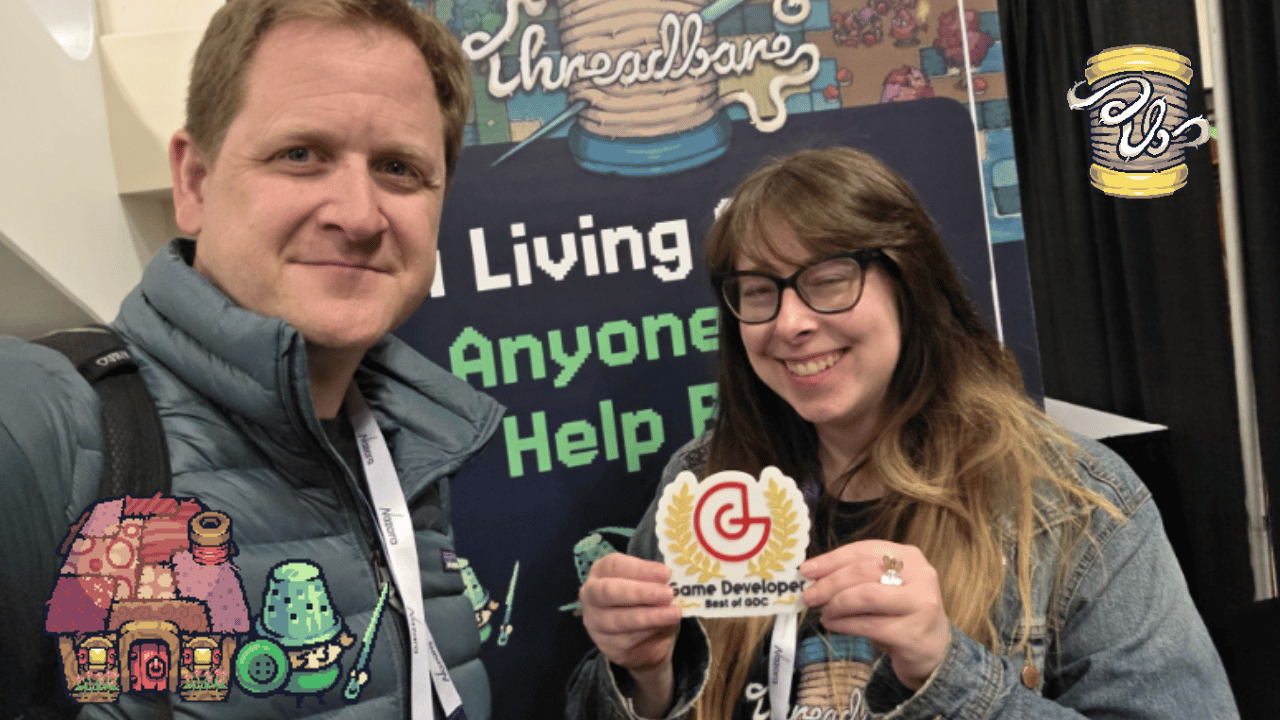
In out 17th episode of the Loom Lounge Ep., Stephen (VP of Learning and Creative Director of Threadbare) and Heather (Director of Learning Programs) played through Threadbare live and unpacked the design choices behind it. This article covers why play matters for learning, the three ingredients that make a game world worth spending time in, and how learners go from playing Threadbare to building it.
Watch: Loom Lounge Ep. 17, the full Threadbare playthrough
Why play matters in learning
Stephen remembers the quarry as an enormous, endless landscape. Go back as an adult and it shrinks to a short dog walk. That shift in scale is exactly what games give back to us.
"What I love about play and games in particular is that you experience childhood again. It feels vast again, it feels big again, it feels like you could do anything." Heather Drolet, Director of Learning Programs, Endless Access
Both Stephen and Heather have spent years building digital playgrounds for education, including in Minecraft. Their case for them is practical as much as it is magical. Taking learners on a school trip is expensive, it raises health and safety concerns, and it isn't always inclusive. A digital world can take every learner somewhere new, and those visits can feel viscerally real.
Heather adds a layer that matters for anyone who loves stories. When you read a book as a kid, you let your imagination play and envision whole worlds in your mind. A game lets you step inside one and make choices there. Being able to create that world yourself is even more powerful.
The three ingredients of immersive game-based learning
Stephen has a simple framework for building game worlds that pull learners in. It works great for video games, and just as well in the classroom.
Ingredient 1: Environment
Give learners a place they want to be. That's true for epic video game scenery, and just as true of a classroom or at home. The space should feel fun, safe, exciting, and varied.
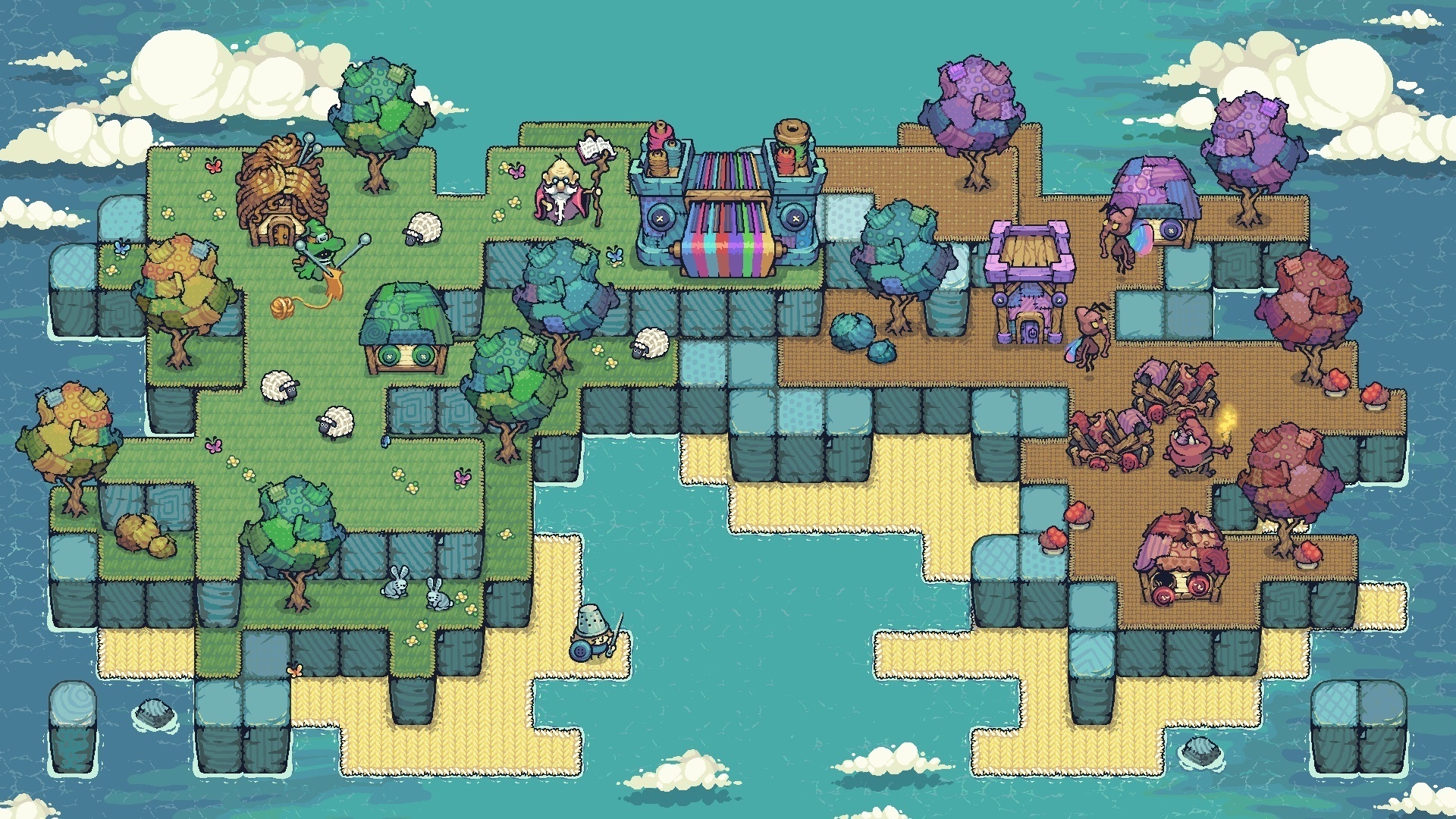
That's why Threadbare looks the way it does. It's a cute, whimsical, brightly colored world made entirely of fabric, with woolen houses, felt bushes, and sheep you'll want to go say hi to. The goal is for players to keep asking, "What's over there? What's across that bridge?" Even small touches count. Day turns to night, and dark caves come with their own sneaky soundtrack, so the world never feels exactly the same twice.
Ingredient 2: Features, functions, and mechanics
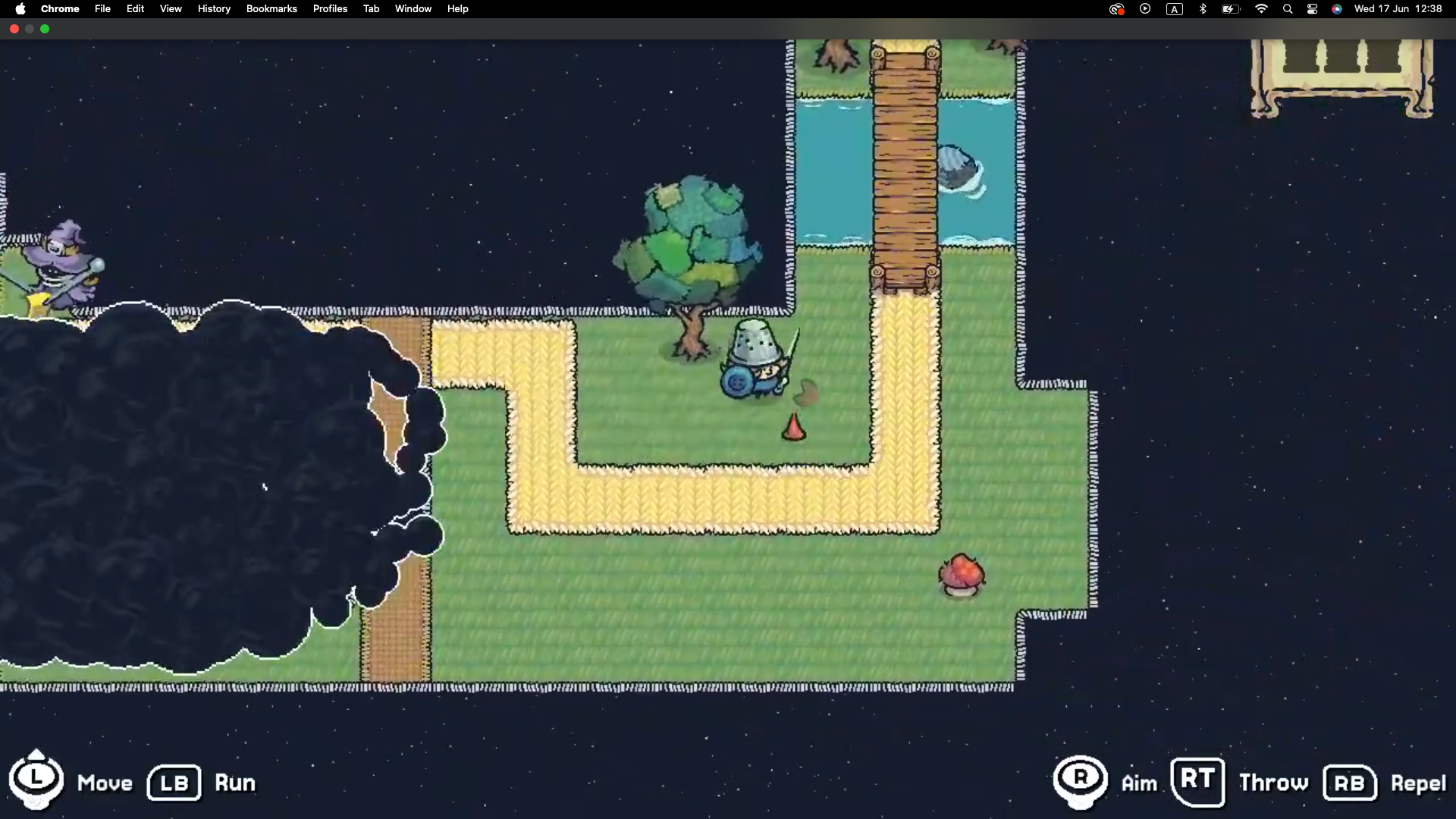
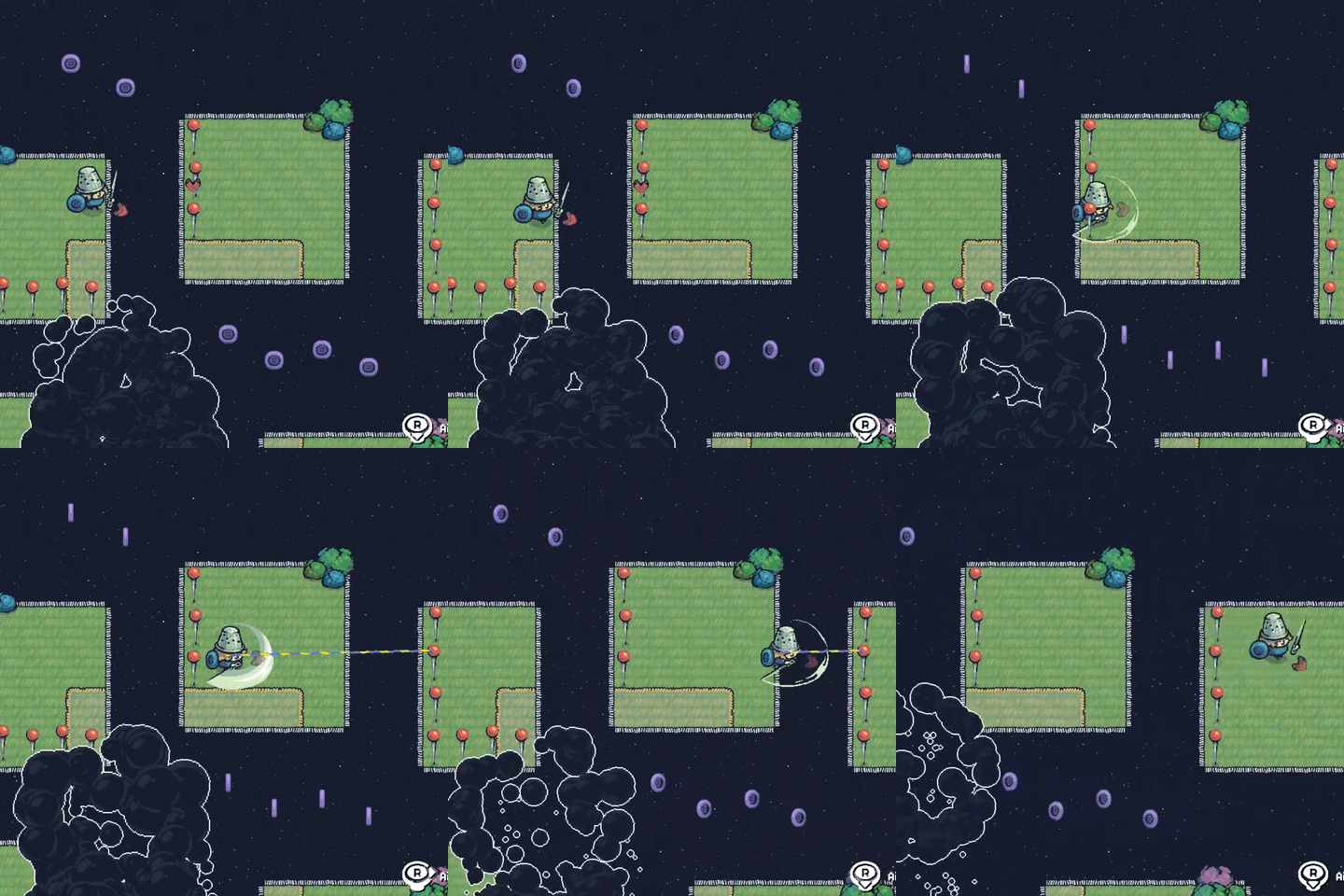
Give learners things to do: buttons to press, levers to pull, puzzles to solve, characters to talk to, and gaps to swing across. Threadbare's opening tutorial walks players through a music puzzle that unlocks a door, a combat challenge where you deflect ink blobs back at the Ink Drinkers, a chase from the encroaching void, and a grappling-hook puzzle using a ball of string.
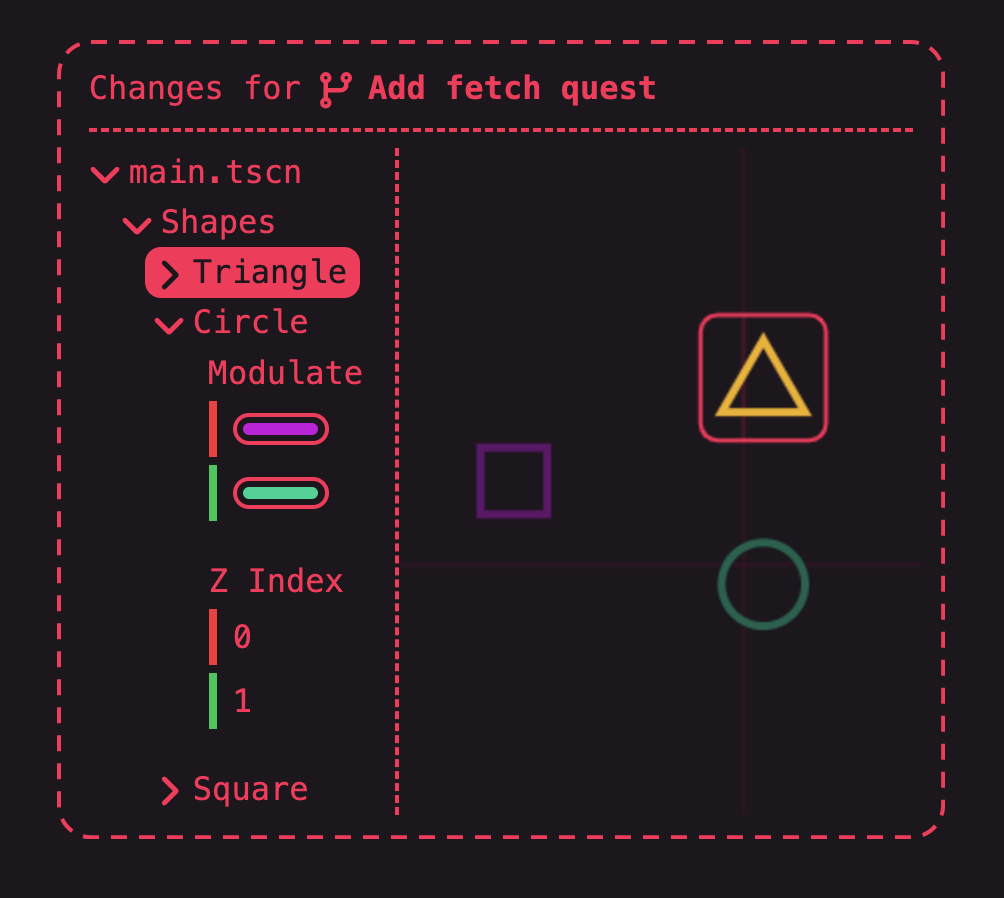
For educators, the key is that each of these is more than just a fun moment. Every mechanic is a building block for game development education and critical thinking. Tile sets, enemies, projectiles, and targets are all templated, so learners can open them up in Godot and change them.
"We've got kids that are coming in and they're like, 'Oh, the Ink Drinkers are too easy. I can make them faster and I can make them harder.' And so they do." Stephen Reid, VP of Learning and Creative Director of Threadbare, Endless Access
Before long, there are ten Ink Drinkers firing heat-seeking ink blobs at triple speed. And that's exactly what we want.
Ingredient 3: Narrative
Narrative is the final ingredient that sews it all together (pun fully intended). The story is what makes learners feel like they matter in the world. They don't always need to be the hero, but they need to feel their choices carry weight. That they are part of something.
Stephen loves books, but he points out what makes games different from a movie: A film starts, flows, and ends the same way every time, no matter how loudly you yell at the screen. In a game, you decide which way to go, which quest to take first, and which character to trust.
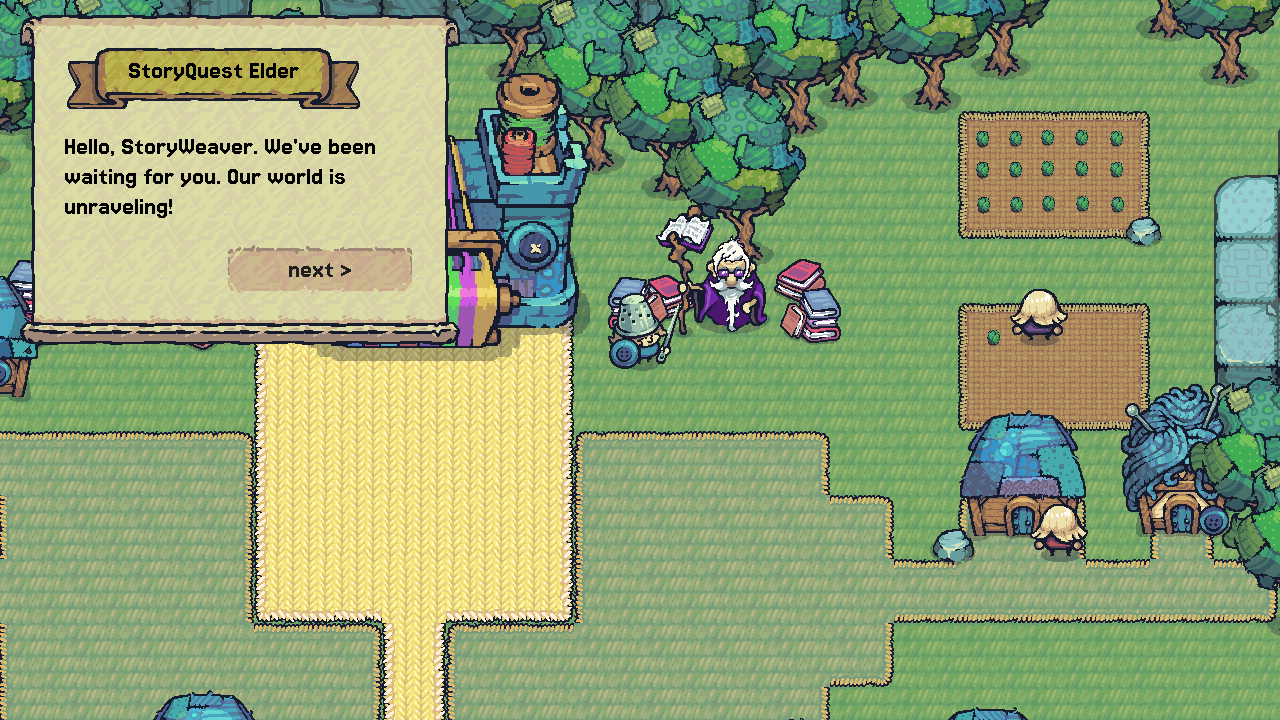
In Threadbare, every story is woven from three core threads: memory (green), imagination (yellow), and spirit (red). Any story, whether it's about a great-grandmother, a historical activist, or a unicorn forest, contains some mix of the three. Players collect these threads on each quest and bring them to the Eternal Loom to help repair the world.
The threat they're up against is the Void, the holes that spread when people stop reading, stop sharing stories, and stop connecting. And the way to push it back is surprisingly human: sit down with someone, hear their story, and pass it on.
"It's human connection that actually does it all. It's the deeper meaning behind what is otherwise a cute, whimsical game." Stephen Reid
Why there's no death in Threadbare
Get caught by a creature in Threadbare and you don't die. You get unwoven. Then the Knit Witches, keepers of continuity and time, knit you right back into the world.
This was a deliberate choice. The team wanted Threadbare to be a safe space where learners can explore without constantly worrying about losing lives. That doesn't mean the game avoids hard topics. It means curiosity, not fear, is what drives players forward.
Learning is not linear
Choice in games connects to one of Endless Access's core principles. Heather explains it with a classroom pattern most of us know all too well: read chapter one, answer the questions, read chapter two, answer the questions.
"Sometimes we need a path that looks different from somebody else's. So we like to offer opportunities both in the game and in our learning experiences that let learners choose a path that works for them." Heather Drolet
In Threadbare, that shows up as multiple quests, multiple routes, and more than one way to beat a puzzle or an enemy. In our programs, it shows up as learning experiences designed around learner agency.
From players to creators: how Threadbare grows
Threadbare is our free, open-source game built in Godot that runs right in the browser, so anyone with a keyboard, mouse, and internet connection can play. And it's built to be unfinished - on purpose.
Much of what you see in the world was made by learners. Take the cat in Freyend, for example, it started as a still drawing made by one of our developers in memory of a staff member's cat. Learners in a school added the animation, the blinking, the head turns, and the meow.
The game also has two kinds of quests:
- Lore quests live deep inside the world of Threadbare. They follow its naming conventions, art style, and music, and they move the main story forward.
- Story quests come from learners and communities around the world, including classrooms, families, and programs. Many of the current ones come from learners in Peru and are in Spanish, each with its own characters, tile sets, enemies, and lighting.
Learners build story quests using the templates and curriculum that come with our programs. They download the templates, open them in Godot, and start tinkering.
Contribution doesn't have to mean code, either. During a recent partner call, someone pitched an idea for bookworms that burrow through books and create portals. Stephen wrote it up for the Threadbare wiki, where it's waiting for an engineer, a learner, or a member of the community to bring it to life. The wiki documents the world's lore, regions, creatures, factions, and characters, and anyone can share ideas for it.
The team also leaves gaps on purpose. The Threadbare repository has a board of open issues, from bugs to missing mechanics. Buttons, for example, can be collected but don't have a use yet. And if you know how to bring a browser game to mobile, the team is waiting for you would love your help.
Our takeaways
- Play builds the stories we carry. Games let learners revisit the feeling of childhood play, where the world feels vast and anything seems possible.
- Digital playgrounds remove real barriers. They can take learners places that field trips can't, without the cost, safety concerns, or access gaps.
- Great game-based learning has three ingredients: environment, features and mechanics, and narrative.
- Safety is a design choice. Threadbare has no death, so learners can explore through curiosity rather than fear.
- Learning is not linear. Players and learners both deserve more than one path forward.
- Players become creators. Many of Threadbare's quests, art, animations, and sounds were made by learners.
Bring Threadbare to your learners
Threadbare was designed so learners would look at something and say, "I like it, but I'd have made it red," and then go make it red. That moment is the beauty of open source, and it's what game-based learning should feel like.
- Play the game: Threadbare
- Explore our learning programs: Explore, Core, and More
- Read next: Contributing to Open-Source Games: What Educators Need to Know
- Get in touch: email learning@endlessaccess.org to learn more about bringing our programs to your learners