Why Is Your First Pull Request So Scary? (And Why It Shouldn't Be)
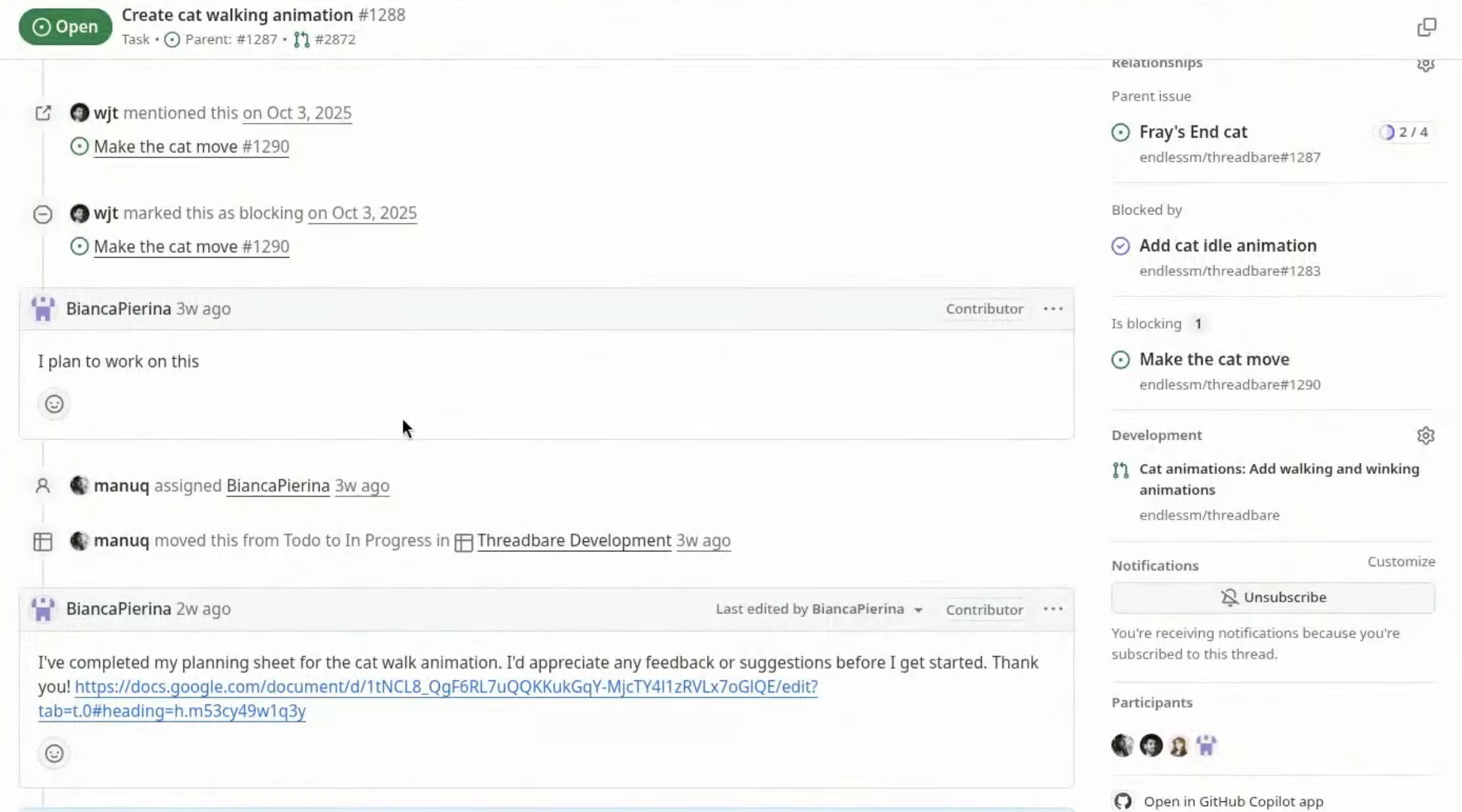
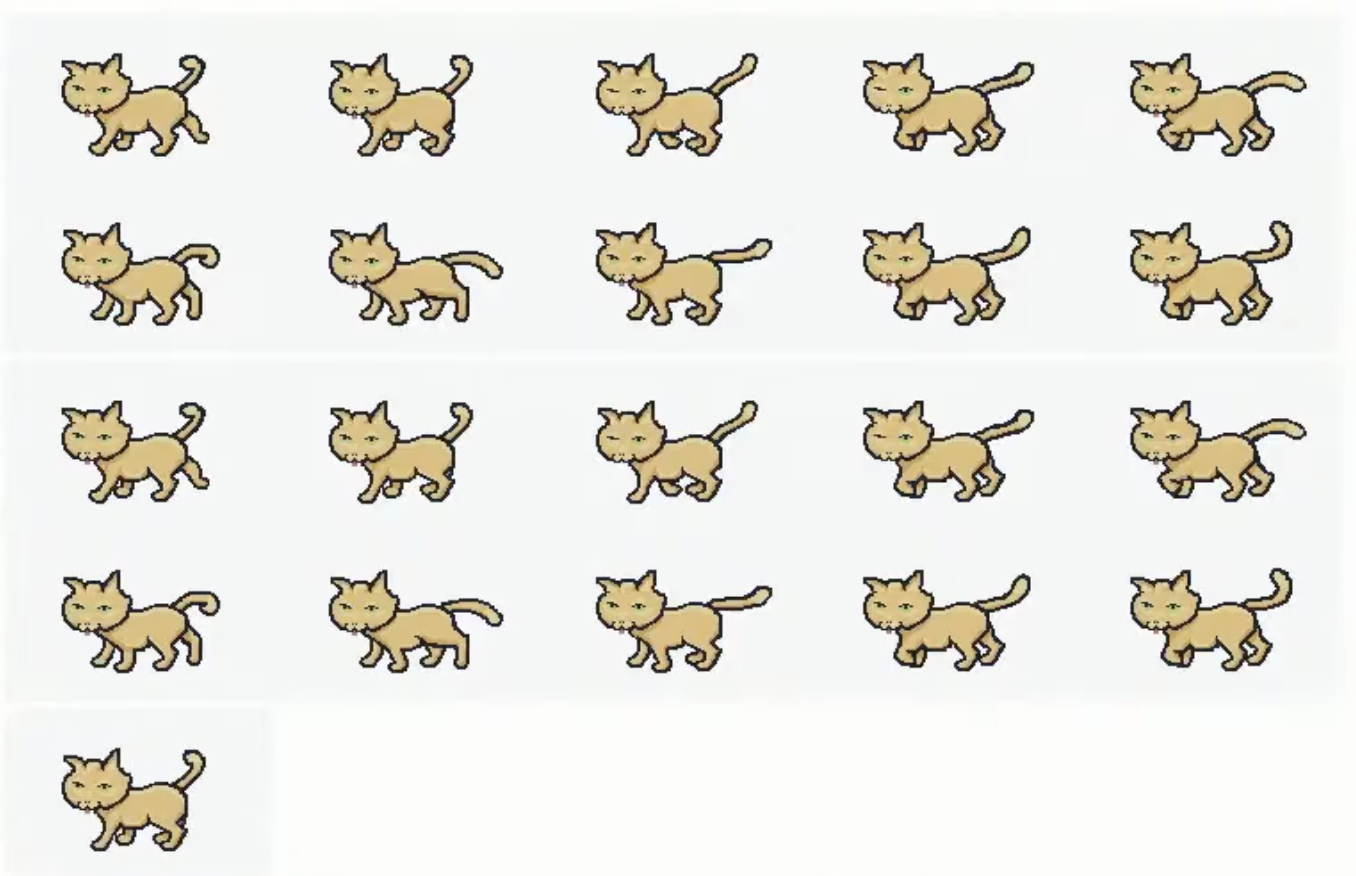
Pierina has a glass table in her living room. When she needed to animate a cat for Threadbare, she put her phone's flashlight underneath it, laid a sheet of paper on top, and traced each frame by hand. Her reference model? Her own cat, whose tail never. stops. moving.
That's the kind of detail you only hear when you ask people about their first real contribution to an open-source project. And in Loom Lounge Ep. 16, that's exactly what we did with Pierina and Alvaro.
The moment it becomes real
Contributing to open source sounds great right up until you have to do it. You find a project, read the contribution guide, make your change, and everything is fine. Then you open the pull request, and suddenly someone is going to look at your work and decide whether it belongs or not.
Our host Luis Sánchez, from the Endless Access community team, described it as the moment the whole thing becomes real. Manuel Quiñones, one of Threadbare's two maintainers, agreed, but for him there is a clear before and after.
Manuel's own first contribution wasn't code. It was a Spanish translation of the user manual for GIMP, the open-source image editor. Personallly, he thought it was fine - keyword here, personally. In actuality, it wasn't: there was already a style guide for how words should be used, and he hadn't read it. The reply was kind, and it came from Federico Mena, one of the creators of GNOME, writing back to a university student in Argentina. That kindness is what kept Manuel going and contributing more to open source.
So what is a pull request, anyway?
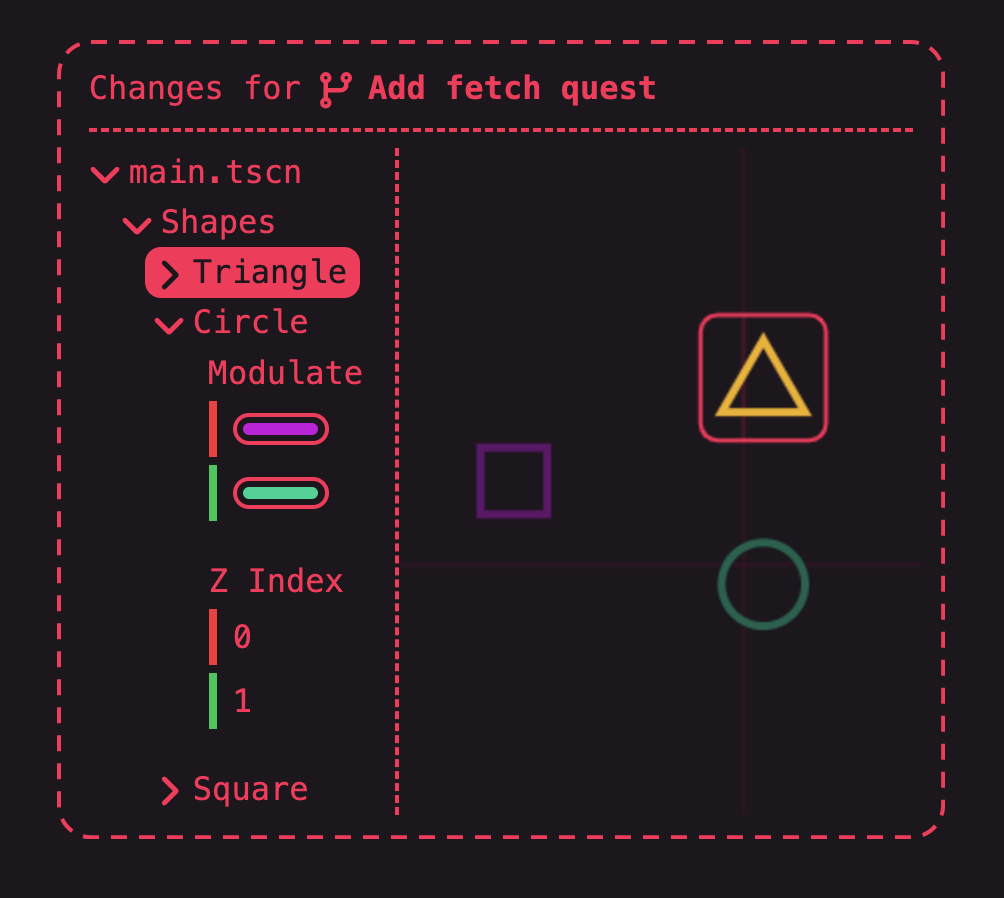
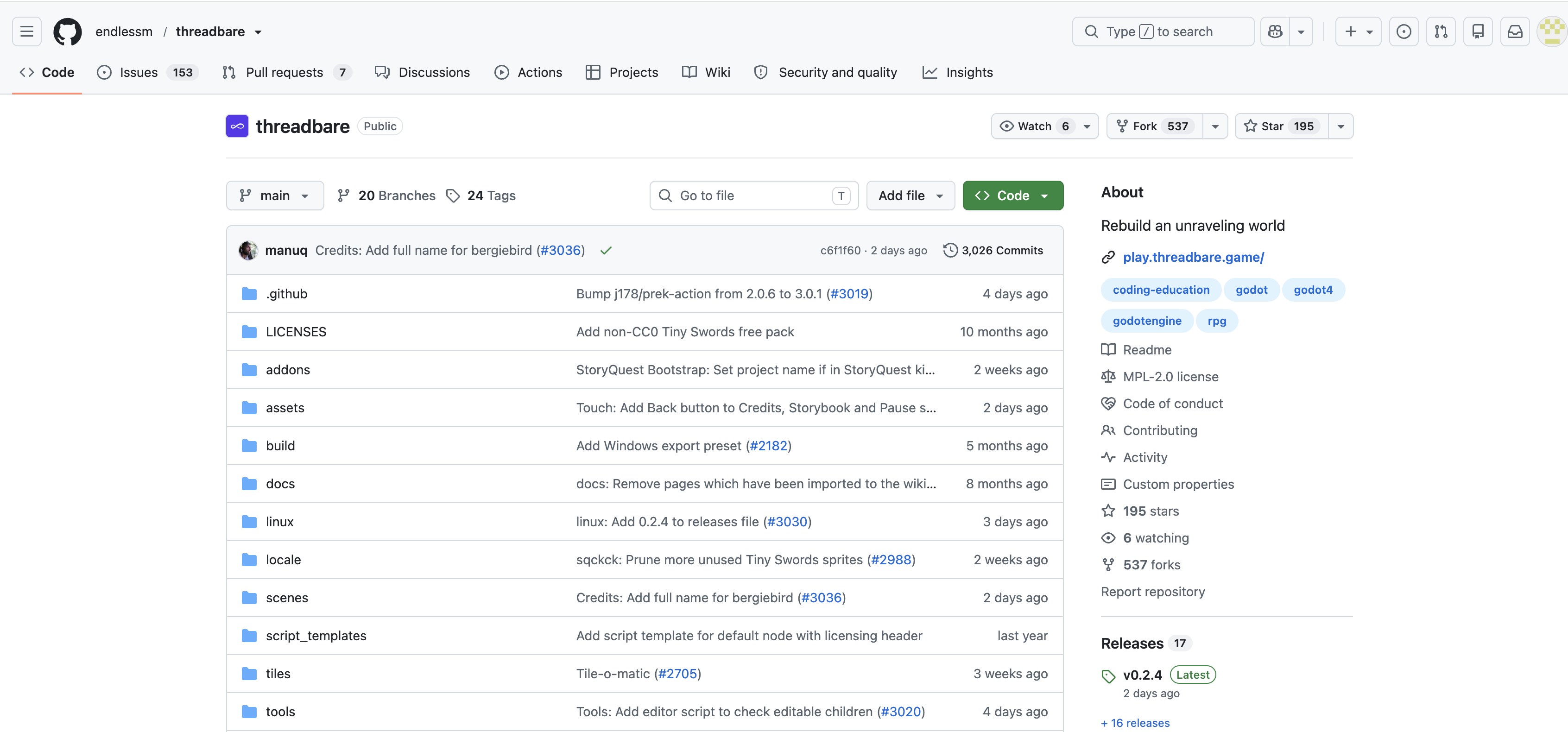
Simply put, a pull request is a proposed change. You create a branch off the main version of the project, make your changes there, commit them, and send them in for review. The team can comment, suggest changes, and eventually merge your work into the main project.
In a game, that change can be code, but it can also be art, music, sound effects, level files, or story. Luis put it nicely: if you think the roof of a house in Threadbare should be green because it fits the lore better, you can propose that. Someone will look at it, and you'll have a chat about it.
"What could I possibly add?"
Our two guests, Alvaro and Pierina, are learners from Peru who made their first contributions to Threadbare through one of our programs. They came in from very different places.
Alvaro is finishing a software degree and had just come back from Gamescom in Germany. He knew what open source was, he just never jumped in because the openness itself was intimidating.
"If anyone can contribute, what can I contribute that's actually different?" Alvaro, learner and Threadbare contributor (translated from Spanish)
Pierina studies business administration and marketing. She got into games through her older sister playing Resident Evil, and she noticed a growing interest in how fashion brands kept showing up inside games. She doesn't code, so she contributed with art: the villains in her team's story quest.
Luis shared something from a survey he helped run at a contributor event in Mexico: one of the most common reasons people don't contribute is exactly what Alvaro described. You look at a project doing something amazing and you shrink. you stand in your own way. But from the maintainer's side, the message is the opposite. There is no such thing as a small contribution.
Fear, then frustration, then something better
We asked both guests how they felt when they learned their work wouldn't sit in a practice folder. It would be reviewed and merged into a game people are already actively playing.
Pierina's first answer was fear. She worried she wouldn't measure up next to teammates who knew more. What helped was asking questions, lots of them, and realizing everyone around her was learning too.
Alvaro's first reaction was frustration. He wanted to build something from scratch, and contributing to an existing game meant working inside someone else's rules. With help from mentors and his team, he found room to make something that still felt like his own.
Manuel pointed out that this is close to what happens when a studio hires you to work on an existing project. Learning to work within a shared codebase, with its own conventions, is a real skill, and you learn to adapt.
What a reviewer actually looks at
Manuel opened Pierina's pull request live on stream and walked through what he checks and why.
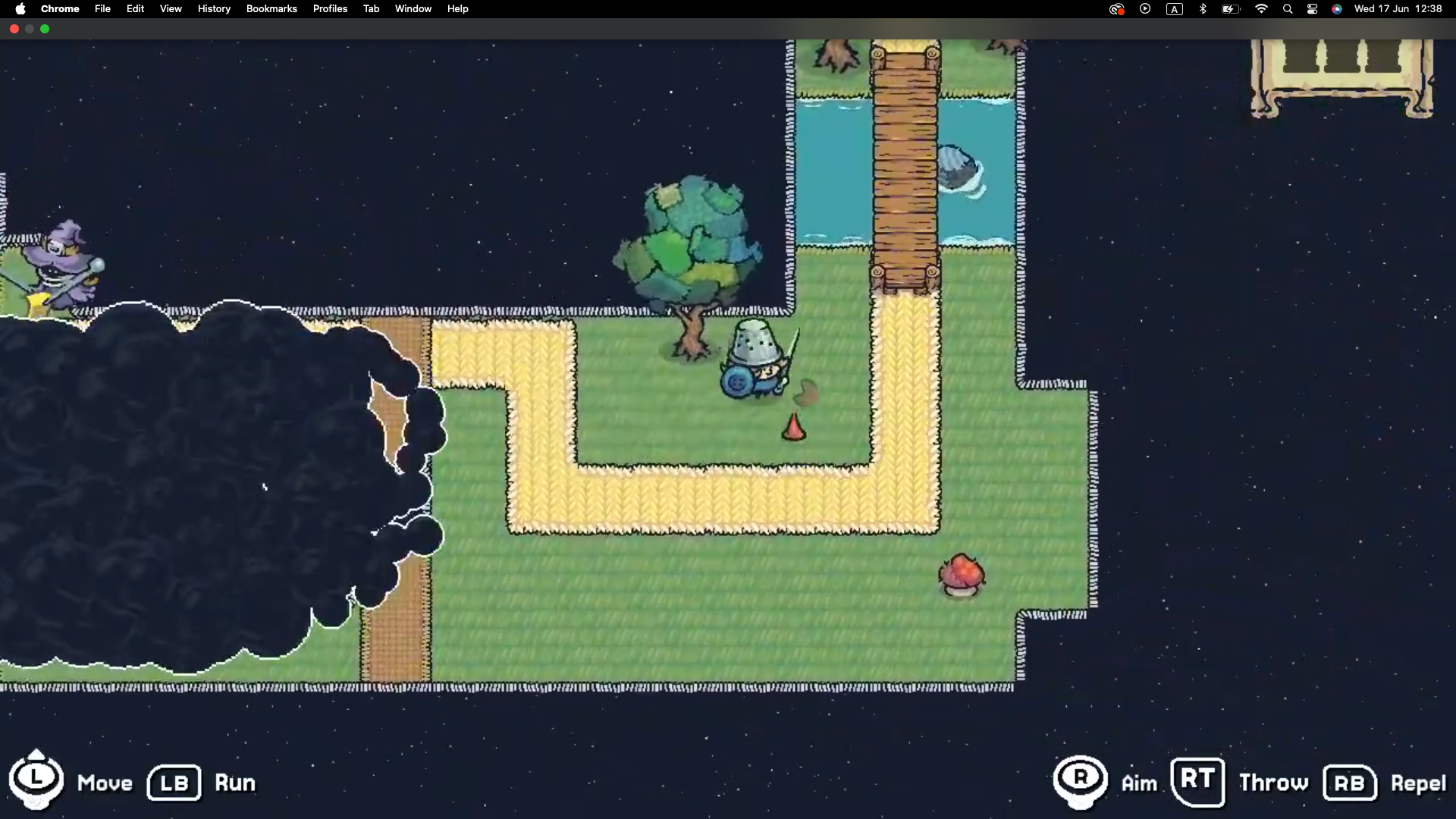
First, he takes feedback seriously, because feedback can hurt. He makes sure he spends time making it constructive instead of saying "I don't like this" and moving on. To make that easier, Threadbare has a visual style guide that documents how an asset should look. One example: every animated character faces right. That's why Manuel asked Pierina to flip her cat. Because all walk animations follow the same naming convention, a right-facing cat could replace the player character in seconds. He tested it on stream, and yes, you can play as the cat.
Reviewing Pierina's work also showed him something missing from the guide: an image explaining the facing rule (That's now an open invitation for anyone who wants to help improve the documentation!).
A few other things Manuel highlighted:
- Link your task. Pierina wrote "resolves" plus the issue number in her pull request, which connects the two and closes the task automatically when the work is merged.
- Explain the why. A one-line code change can still need a long description, because the reason behind it matters more than the change itself.
- Let tools handle style. Threadbare uses pre-commit to apply consistent code formatting automatically, so nobody argues about tabs versus spaces.
Good first issues, and why we ask you to do them by hand
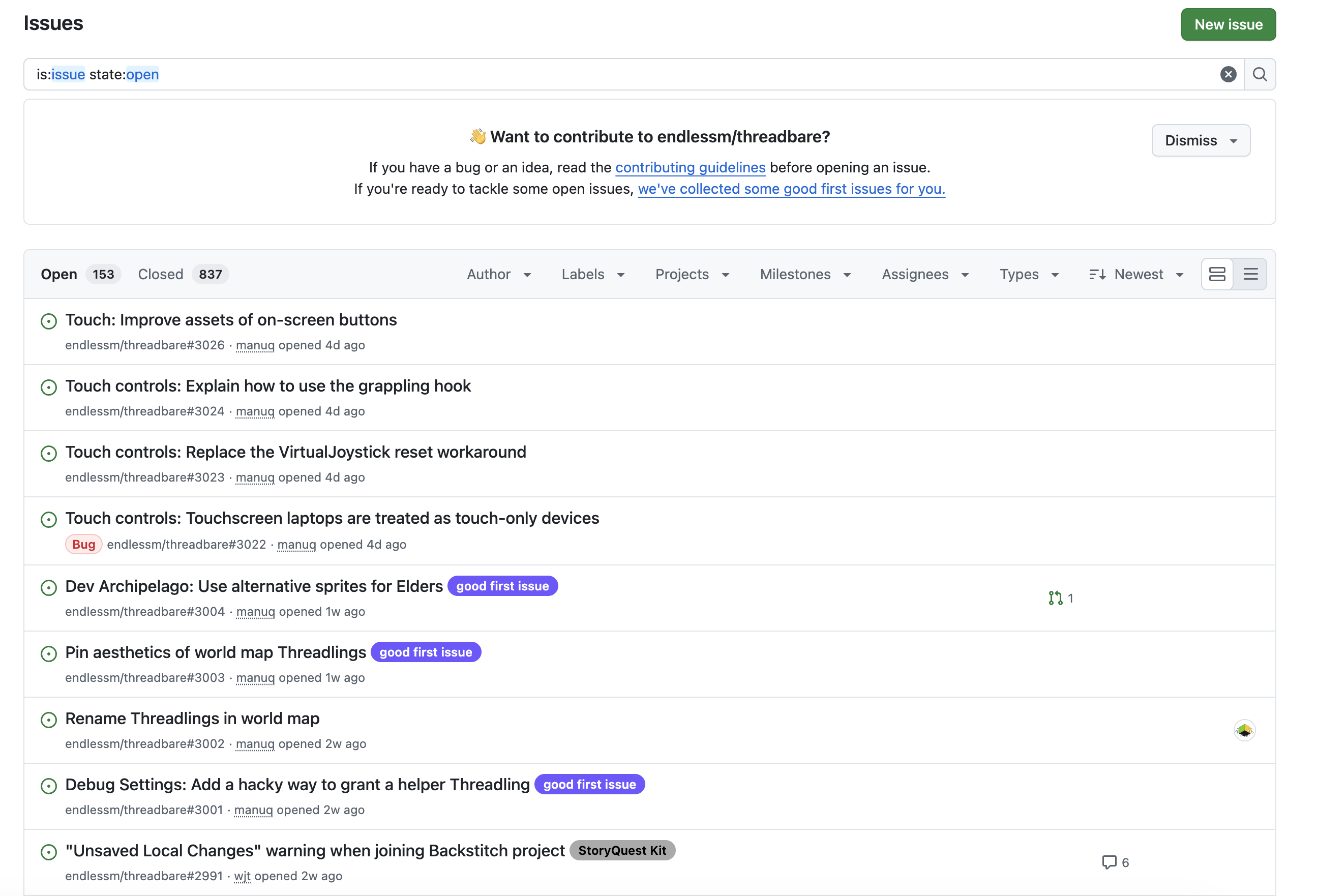
Threadbare labels beginner-friendly tasks as good first issues. Alvaro is working on one right now: the game credits stick to the bottom of the screen on tall displays and need to be centered.
The point of these tasks isn't the fix itself. It's walking through every step of contributing: installing Godot, getting the project with Git, creating a branch, opening a pull request, describing your change. As cliche as it might sound, it's the journey that matters, not just the destination. That's also why our AI policy asks that good first issues be done by hand. If an AI does it for you, you skip exactly the part you came to learn.
You don't have to open a pull request to contribute
Every pull request in Threadbare automatically generates a playable build with that change included. That means anyone can play it and leave feedback, not just the maintainers. Right now Manuel and Will review everything, and sometimes they're a little overloaded. Reviewing someone else's pull request is a real contribution, and it helps your own work get reviewed faster.
Reporting bugs, playtesting, improving documentation, sharing a project you love: all of it counts.
What they'd tell someone who's still nervous
Pierina's advice was simple: ask for help. She tried tutorials first, then reached out to her mentors, teammates, and eventually Manuel. She worried he'd get annoyed by all her questions (Spoiler alert: He didn't). Now Godot and LibreSprite feel familiar, and as Manuel pointed out, the next person who wants to animate a walk cycle can ask her for a review.
Alvaro suggested a short “where do I start” video to help people pick a path based on what they enjoy: art, levels, or code. Even a suggestion like that is valuable enough to us that it’s going on our wiki to-do list.
"Sometimes we don't have the answer either. Ideas are a contribution too, and you could be the future maintainers." Manuel Quiñones, Maintainer, Threadbare (translated from Spanish)
Make your first contribution
Watch the full episode (in Spanish) to see Pierina's pull request reviewed live.
Explore Threadbare and find a good first issue to try.
See our learning programs if you want to bring this experience to your learners.
And if you're stuck, come say hi on Discord!