Pay-As-You-Go Laptops in Africa: Angaza’s CEO on Access, Credit, and Quality
Mission 300 aims to connect 300 million people in Africa to electricity by 2030. It’s a huge goal. But power is only half the story. In regions where up to 80 percent of people are unbanked, who finances the devices that make that power useful?
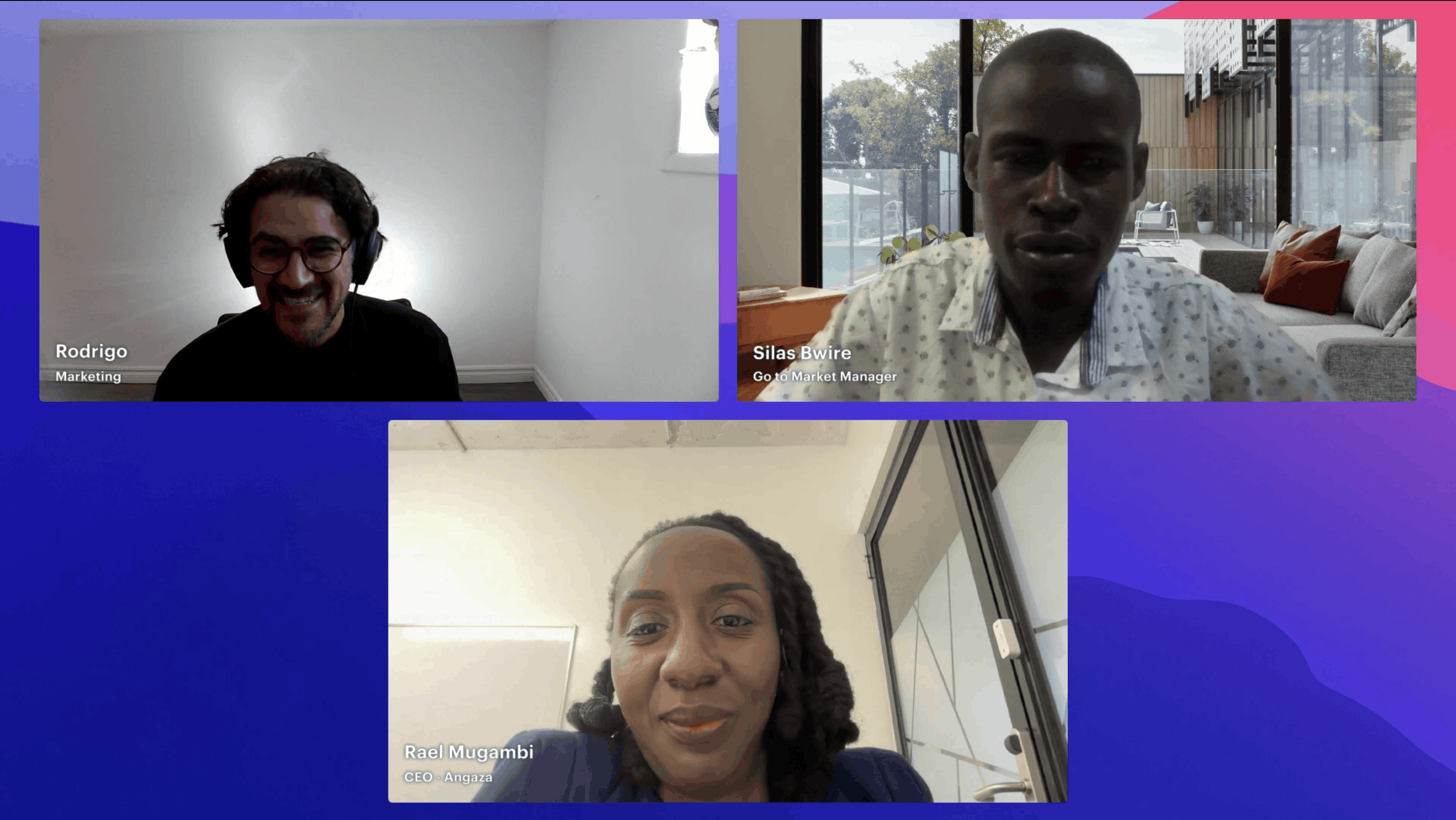
To find out, we sat down with Angaza CEO Rael Mugambi and Silas Bwire from our Device Access team. Rael’s answer starts with something most of us take for granted.
“How do you call a cell phone life-changing? Until you go a day without your cell phone. That's how you know it has changed your life.” Rael Mugambi, CEO, Angaza
Now imagine you've never been able to buy one in the first place. Not because you don't need it, but because no bank will lend to you, and your wage doesn't stretch to the full price up front. That's the reality for a lot of people across sub-Saharan Africa. It's also the problem Angaza has spent more than a decade working on.
At Endless Access, we care about accessibility. Our Device Access Program puts Endless laptops into the hands of learners, families, and teachers, while Angaza's pay-as-you-go technology is a big part of how that happens. So we sat down and had a chat with Rael, who stepped into the CEO role at Angaza about eight months ago, after five years with its parent company Adapt IT and nearly two decades in tech. From the Endless Access side we had Silas Bure, who works with our partners across the Africa region, while Rodrigo, from our Marketing team, hosted.
Here's what we learned.
From solar lights to laptops
For most of its first decade, Angaza was a solar company. Its partners used its platform to sell solar home systems to customers who couldn't pay for them in one go.
Then, an interesting shift happened: Those partners kept collecting payment data, and that data told a story. A customer who'd paid off a solar system had just proven they were reliable. So the obvious next question was: What else do they need? What else can we help them finance?
The answer was a long list. Clean energy, yes. But also a phone to stay connected. A tablet or a laptop for school. A fridge for the shop.
“It supported the hypothesis that we needed to pivot, and support these customers to access the different devices they need to do their day-to-day business, go to school, or connect to family and friends.” Rael Mugambi
Today, Angaza describes itself as a tech company more than a solar one. Its job shifted to build the rails that let manufacturers, distributors, telcos, and organizations like ours offer those devices on terms people can actually manage.
Your bank statement lives on your phone
If you live in North America or Europe, buying a laptop on credit usually means a card or a bank loan. In the regions where Angaza works, Rael says, somewhere between 60 and 80 percent of people are unbanked, depending on the country (Source: Angaza).
That doesn't mean people have no financial history. It just lives somewhere else. Wages often arrive by mobile money, and bills get paid the same way, through services like M-Pesa, Airtel Money, or MoMo.
“You might not have a statement with a financial institution, but your financial statement sits within your mobile application.” Rael Mugambi
That record is what makes pay-as-you-go work. Here's how Rael walked us through it, using Silas as her example customer:
- Score the customer. Look at how regularly Silas gets paid and what he's paid off before, and figure out what he can comfortably afford.
- Match the device and the plan. Based on his financial history, he can take home a specific device and pay a set amount every day, week, or month.
- Pay a little at a time. Silas pays by mobile money, often in just a few steps with a USSD code on his phone. He gets reminders when a payment is due.
- Own it. At the end of the plan, the device is fully his.
There's one technical piece that makes the whole thing possible: every device has to be lockable. If a payment is missed, the device stops working until the payment is made. That's why Angaza works with partners to decide which products can be offered on pay-as-you-go at all.
Silas sees the results first-hand in Kenya, where he's based.
“People need a lot of things, but affordability is a big issue here. With this model, many people get the opportunity to acquire a product they would not have been able to acquire [otherwise]. For people working on minimum wage, this is a game changer.” Silas Bwire, Device Access, Endless Access
Buy what you need, not what you want
Rodrigo raised something that stuck with all of us. A lot of modern consumer credit is built to sell people things they'll never quite finish paying for. Card on card on card, and the debt just follows you around.
Pay-as-you-go flips that. Before anyone takes a device home, the partner has checked that they can actually pay it off. You finish, you own it, and you move on to the next thing. Rael put it simply:
“They buy what they need, not what they want. The thing that I buy has to turn the needle in my life.” Rael Mugambi
And the examples she gave were all about turning that needle:
- A laptop, because you're going back to school.
- A fridge, because you run a shop and your sodas need to be cold.
- Clean cooking, because charcoal is bad for your health and for the planet.
- A solar home system instead of candles, so your kids can study in the evening.
It also happens gradually. First a phone. Then, once the business grows, a fridge. Then a laptop.
“It's incremental. If I get a laptop and go to school, I'm able to get an education. I'm able to run my business. It's a beautiful story when you go out there and you're like, wow, you started with this, and now you have this big shop. It changes lives.” Rael Mugambi
Quality is the whole point
Here's a part of the model we don't think gets talked about enough. When a customer pays over 12 to 24 months, the seller is in a long relationship with them. A device that breaks in month three isn't just a returned product. It's a customer who stops paying and stops trusting you.
“This is someone who will call you and say, I bought this phone from you, it doesn't work, I'm bringing it back. You don't want that situation. So all the manufacturers and distributors we work with make sure their product is high quality, because the journey with this person is long.” Rael Mugambi
Silas sees the same thing from the customer's side. Many of the people he meets, had planned to buy a cheap laptop that would last them a short while, because that was all they could afford in one payment. Then they found out they could buy a brand-new laptop with pay-as-you-go.
“Rather than settling for a lower-quality product because they didn't have the money, they can pay a down payment and end up with a quality product that serves them for a long time. And they don't feel left out.” Silas Bwire
Partners also stay with customers through support, so if something goes wrong, there's someone to call. Rodrigo summed it up as quality in two senses: a quality product, and a better quality of life, without the stress of debt you weren't sure you could carry.
Where the Endless laptop fits in
Phones can do a lot, but when it comes to doing homework, building a spreadsheet, or working on a document, that's where they can fall short and you find yourself needing an actual laptop. And unfortunately, the reality is that millions of students around the world still don't have one.
That's where the Endless laptop comes in. It's built for learning, and it's built for places where the internet is patchy or expensive. Many of our partners work deep in rural areas, where buying data bundles all the time just isn't realistic.
“We provide an affordable solution through Angaza's pay-as-you-go technology. Then we make it even more affordable by providing offline content.” Silas Bwire
In practice, that looks like:
- For school-age kids: an offline encyclopedia, math video lessons and a lot of educational content, no data needed.
- For the little ones: typing and math games that feel like play but teach real skills.
- For small business owners: LibreOffice and other free, open-source tools that help you manage day-to-day operations, so there are no license fees on top of the laptop.
- For teachers: a quality machine they can actually afford on a teacher's salary.
Silas says teachers have been some of the most interested buyers. Many told him they could never afford a brand-new laptop outright. With a down payment and small regular payments, now they can.
The opportunity: 300 million and counting
We asked Rael what's ahead for Angaza. Her answer: plenty of challenges, and even more opportunity.
She pointed to a GSMA conversation between telco CEOs in May. Telcos have built the towers, but a big group of people living right next to them are still on feature phones. When asked why, the most common answer wasn't about not knowing how to use a smartphone. It was money. People simply couldn't afford the upgrade.
At the same time, there's a huge push for clean energy across the continent. Rael mentioned Mission 300, the World Bank and African Development Bank initiative to connect 300 million people in Africa to electricity by 2030. That's a lot of solar systems, cookstoves, and appliances that people will need a fair way to pay for.
So who is Angaza looking to work with? Partners who are in it for the long haul:
- Mobile network operators and device makers trying to reach customers who can't pay cash.
- Distributors and manufacturers new to a market.
- Agriculture businesses are thinking about things like solar water pumps.
- Anyone willing to rethink their business model and trust the data.
“It doesn't happen overnight that when you sell the device, you make your money back. You need to invest and be willing to go the long haul, for a year or two years.” Rael Mugambi
Silas jumped in here with a thank-you, because through Angaza, our Device Access team has been introduced to several new partners, including a major telecommunications company, and now we're working toward rolling that program out soon.
There's an education angle, too. Angaza is now part of Adapt IT, which has a large education business. It's the only certified Moodle provider on the continent, and it works with institutions like UNISA and USIU.
“We can't do it alone”
Rael closed with a bit of news. After more than ten years in this space, the company is calling this chapter Angaza 2.0, or Angaza powered by Adapt IT. The mission hasn't changed: build technology that helps businesses deliver life-changing products. And she was clear that it takes partners to get there.
“Angaza did start in San Francisco, but it is now based in Africa. We are here to support Africa and transform the world. We're now an African company.” Rael Mugambi
We love that line.
For Silas and the Device Access team, the goal is just as clear: reach more people across Africa, especially in rural areas and the communities that get left out most often. Working with Angaza is a big part of how we get there.
“Through this partnership, I believe we are going places.” Silas Bure
A huge thank you to Rael and the whole Angaza team for joining us.
Want to go further?
Watch the full conversation, the complete conversation with Rael, Silas, and Rodrigo.
Learn about the Device Access Program, how we get Endless laptops to learners, families, and teachers.
Get in touch, if you're a distributor, telco, school, or organization interested in bringing affordable laptops to your community, we'd love to talk.
Quotes have been lightly edited for length and clarity.