Launch Day Is Only the First 100 Meters: What Happens After You Finish Your Game
Luis Sánchez, from our community team, once told his wife he was heading over to a friend's place to play some Cuphead. He came home at 6 a.m. They hadn't been out. They'd just been stuck on the same boss for hours, refusing to quit until they beat it.
Everyone on our team has a story like that about finishing a game. That rush when the credits roll, and the strange emptiness right after. In Loom Lounge Ep. 12, we flipped the question around: what happens when you're the one who made the game, and it's finally out in the world?
Like the fish in Finding Nemo who finally escape the dentist's tank, roll into the ocean in their plastic bags, and ask: what now?
Meet Smarto Club
To answer that, Luis and our marketing team, Valentina Sandoval and Rodrigo Sánchez, sat down with Alonso Canales, co-founder of Smarto Club, a four-person studio in Santiago, Chile.
Alonso met his co-founders in the game development club at Pontificia Universidad Católica de Chile. He was the programmer, and Daniela and Francesca were the artists. He really wanted to make a game with them, and he noticed they had an entire drawer full of tea. So he pitched a game about tea.
That became TeaCup, a cozy narrative adventure about a little frog collecting tea leaves for a tea party, inspired by children's picture books like Frog and Toad. It launched in 2021 on PC and later on PlayStation, Xbox, and Nintendo Switch. Since then the studio has released a cozy puzzle game about building planets, plus a few horror projects that started at a game jam and went viral on YouTube. Their running joke: they make Animal Crossing meets Silent Hill.
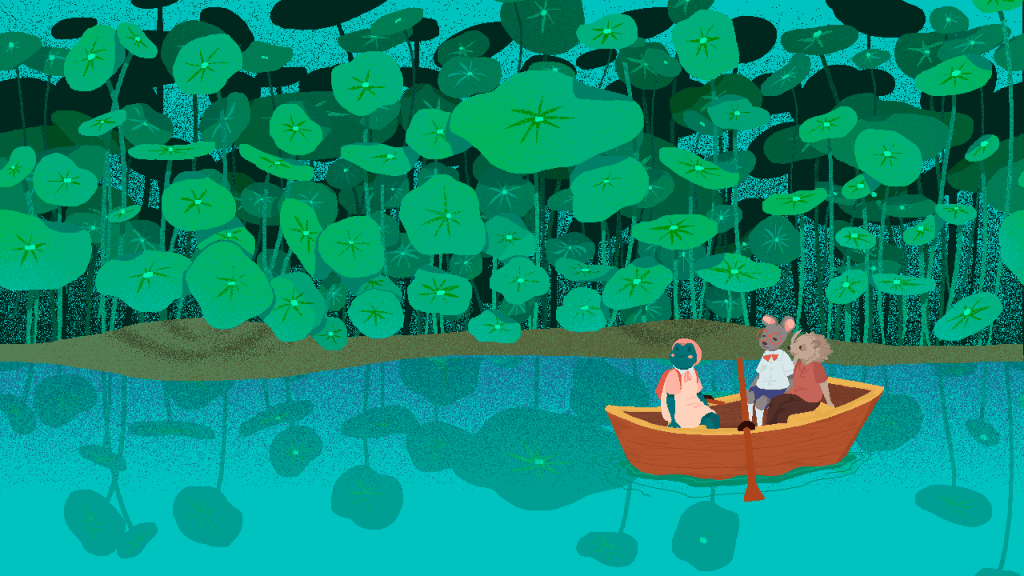
source:https://smarto.club/teacup-press-kit/
What a publisher actually does
Making a game is one job: programming, art, design, testing. Getting it to players is another: store pages, console ports, marketing, translations. Those second-half tasks repeat from game to game, which is why publishers exist. A publisher with a great translator or an experienced Switch porting team can use them across many games. Publishers also tend to have more money, so many developers look for one to fund development.
For TeaCup, Alonso met Matt White, CEO of Whitethorn Games, at an online networking event during the pandemic. The hobby project became a commercial one. The team looked at how much they had built in three months, projected a year of work, and scoped the game to fit: about two hours long.
If you're planning to pitch, Alonso's advice is clear. Today, an idea isn't enough. Publishers want:
- A playable demo that shows your art style, mechanics, and ideally audio and narrative.
- A presentation covering your team, development plan, budget, and what you need from them.
- Proof of interest, like a successful demo or social channels where people are excited about the game.
And timing depends on money. If you need funding, start looking earlier. If you can fund the game yourself, many publishers specialize in helping at the end, getting the game in front of as many players as possible.
The part nobody warns you about
When Luis asked what surprised Alonso most about launch, the first answer wasn't technical.
"You spend so much time focused on it, and then the game is out in the world, people are playing it, and there's an emotional emptiness you don't expect if you've never launched a game before." Alonso Canales, Co-founder, Smarto Club (translated from Spanish)
The second surprise is that launch isn't the finish line. Today you can push an update to Steam in an hour, so players expect you to listen, fix bugs, and respond in a reasonable time. Teams that burn themselves out reaching launch day often have nothing left for the weeks after. Rodrigo summed it up: it's a marathon, not a sprint. Alonso's version: launch day is only the first 100 meters.
Bad reviews, good reviews, and knowing your game
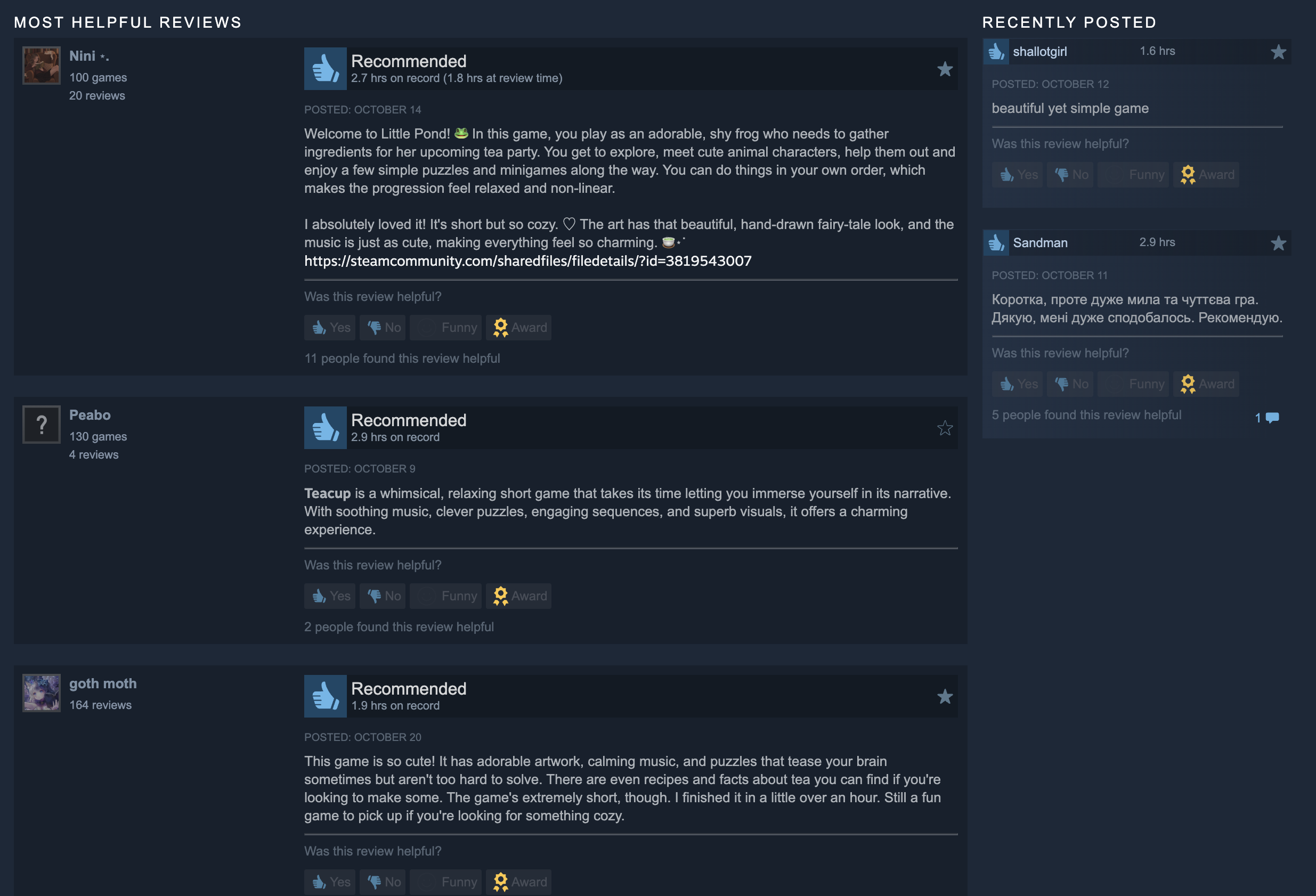
Valentina asked how the team handled their first negative review. Alonso's answer was about expectations. TeaCup was their first commercial game. They knew the gameplay would be simple, and they chose to focus on art and story. So when reviews called it simple, or even boring, it stung, but it didn't knock them off course. Knowing your game's weaknesses keeps you from overreacting to one person who didn't like it.
The review that stuck with him most went the other way: someone wrote that they'd been having a terrible day, played TeaCup, and felt better afterward. That was exactly the feeling the team wanted, like a warm cup of tea on a cold day.
itch.io, Steam, mobile, or console?
Where you publish shapes your workload and your income. Alonso walked through the options from easiest to hardest:
- itch.io: Anyone can upload, and it's great for demos, prototypes, and early feedback. The trade-off is reach. Sales are usually small.
- Steam: A $100 fee, a confusing interface, but open to anyone and the biggest audience. It's where Smarto Club's games have done best, especially during Steam sales. Players there expect more polish and review accordingly.
- Mobile: Android is more open than Apple, but both stores are crowded, so standing out is hard.
- Consoles: Expensive dev kits, weeks or months of porting work, and platforms that want proof you're an established studio. Worth it only if your game fits that audience. TeaCup did well on Nintendo's family-friendly audience and less well on PlayStation, where players lean toward action games.
The long tail is real
Rodrigo asked if games have a rule like film, where a movie needs to earn about 2.5 times its budget to count as a hit. Alonso said budgets vary too much for one number, but offered a rough signal: around 1,000 Steam reviews in the first month is a success.
The bigger lesson is that games keep selling. TeaCup's launch peak was lower than the team hoped, but it kept selling steadily through Steam sales. Their publisher kept finding new life for it: a Humble Bundle, a deal to put it on airplane entertainment screens, and in 2026, a free giveaway on the Epic Games Store for mobile, which came with a payment to the studio.
"Your launch doesn't decide whether your game was a success. Launch isn't the end. It's a beginning." Alonso Canales, Co-founder, Smarto Club (translated from Spanish)
His favorite example is Among Us, which had a quiet launch and went viral years later.
Advice for your first launch
Alonso's advice to his younger self: stop treating your first game as all or nothing. Keep supporting it after launch, and think long term. Maybe this game isn't a hit, but the dialogue system you built for it could power your second and third games. That long view takes the pressure off and makes the whole process easier to enjoy.
Keep building
Watch the full episode (in Spanish) for the whole conversation.
Follow Smarto Club and check out their games on Steam.
Explore Threadbare, download the code, and start making your own mistakes.
See our learning programs to bring game making to your learners.